Written by Jackson Pearce Student engineer and creator of TalonTodo
I used to think studying meant sitting at my desk for hours, reading the same chapters over and over, highlighting everything, and hoping something would stick. I'd spend entire weekends "studying" but feel like I learned nothing. My grades were okay, but I was working way harder than I needed to.
Then I discovered the science of learning. Research in cognitive science shows that most students study in ways that feel productive but are actually inefficient. I was doing everything wrong—cramming, re-reading, highlighting without thinking. No wonder I was exhausted but not learning effectively.
That realization changed how I study, and it's part of why I built TalonTodo. I needed a tool that would help me implement evidence-based study techniques, not just track time spent "studying."
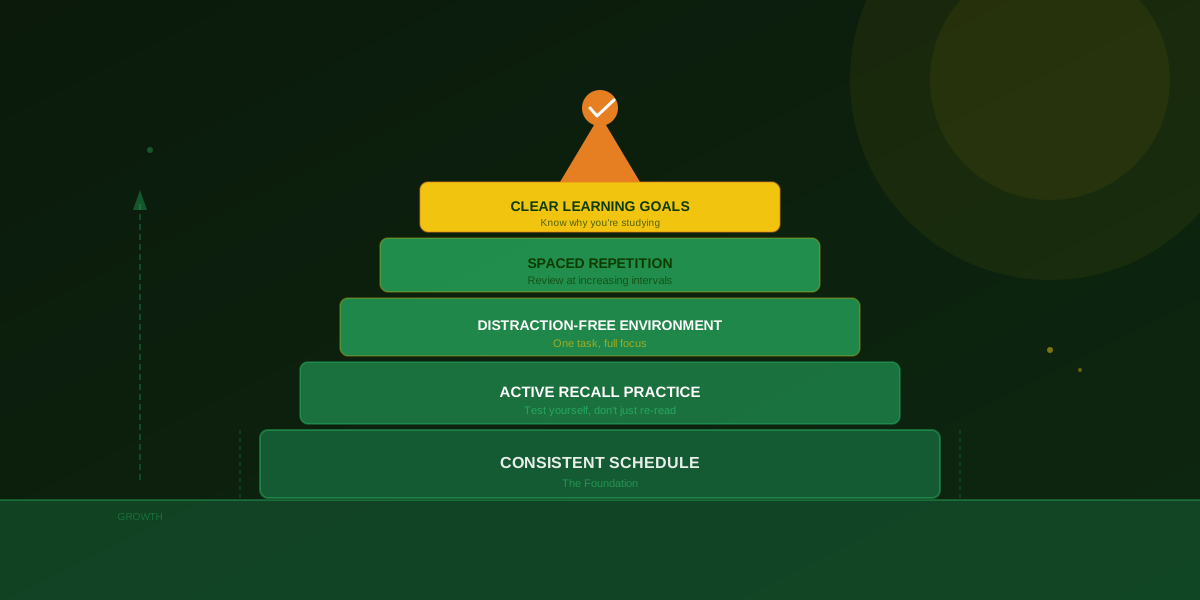
Why Study Habits Matter
Study habits are the foundation of academic success. Good habits make learning more efficient, reduce the need for last-minute cramming, improve long-term retention, decrease stress, and build confidence.
The key is consistency—small, regular study sessions are far more effective than occasional marathon sessions. I learned this the hard way when I crammed for a final exam, got a decent grade, but forgot everything within weeks. That's not learning—that's temporary memorization.
The Science of Effective Studying
Understanding how your brain learns can help you study more effectively. Research in cognitive science reveals several key principles that most students don't know about.
Spaced Repetition
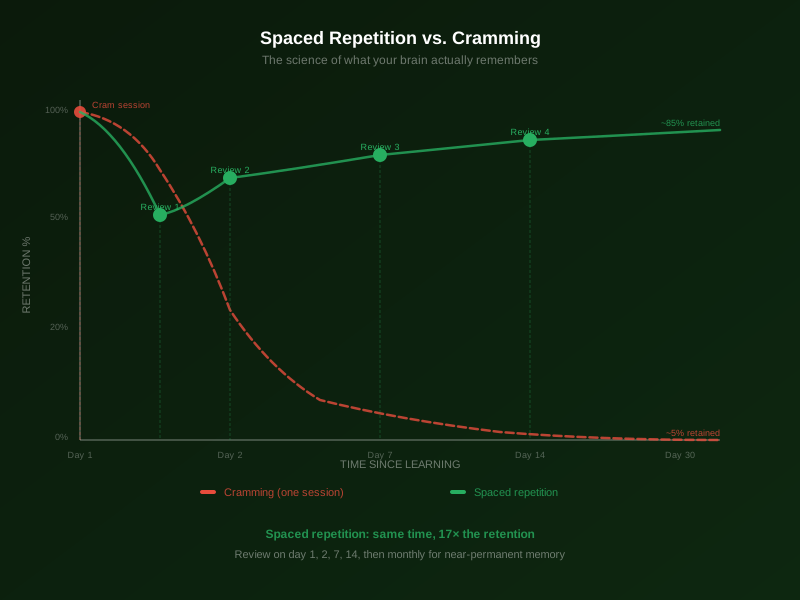
Information is better retained when reviewed multiple times over increasing intervals. Instead of studying everything the night before an exam, review material the day you learn it, then again after 2-3 days, then after a week, then after two weeks.
I used to study by cramming everything right before exams. Now I review material regularly, and I retain it much better. The first time I tried spaced repetition, I was skeptical. But my test scores improved, and more importantly, I actually remembered the material months later.
Active Recall
Testing yourself on material is more effective than simply re-reading. When you re-read, you recognize information. When you test yourself, you retrieve it. Retrieval strengthens memory.
I used to re-read my notes constantly. Now I cover them up and try to explain concepts from memory. It's harder, but it works. The struggle to recall is what makes the memory stick.
Interleaving
Mixing different subjects or topics improves retention compared to blocking one subject at a time. Instead of studying all of chemistry, then all of physics, mix them up. Study some chemistry, then some physics, then back to chemistry.
This feels less efficient because it's harder. But that difficulty is what makes it effective. Your brain has to work harder to distinguish between concepts, which strengthens learning.
Elaborative Encoding
Connecting new information to existing knowledge helps it stick. When you learn something new, ask: How does this relate to what I already know? What's an example from my own experience? How does this connect to other concepts?
I used to memorize facts in isolation. Now I actively look for connections. When I'm learning a new programming concept, I think about how it relates to concepts I already know. This makes it much easier to remember.
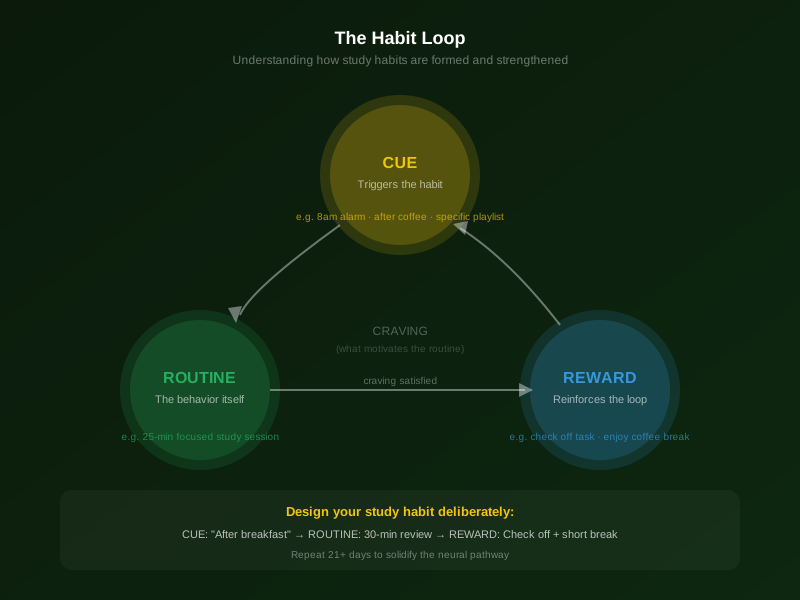
Essential Study Habits to Develop
Create a Dedicated Study Space
Your environment significantly impacts your ability to focus and retain information. I used to study on my bed, at the kitchen table, in coffee shops—anywhere. No wonder I couldn't focus.
Elements of an effective study space:
- Free from distractions (phone in another room, no TV, no social media)
- Good lighting and comfortable seating (but not too comfortable—you don't want to fall asleep)
- Organized with necessary materials (textbooks, notes, supplies)
- Consistent location (helps your brain associate the space with studying)
I set up a dedicated desk in my room. When I sit there, my brain knows it's time to study. The association helps me focus faster.
Follow a Consistent Schedule
Regular study times train your brain to be ready to learn. Consistency builds momentum. I used to study whenever I "felt like it," which meant I rarely studied.
Tips for creating a study schedule:
- Study at the same times each day when possible
- Match study time to your natural energy peaks (I'm a morning person, so I study in the mornings)
- Include breaks in your schedule (I use the Pomodoro Technique—25 minutes study, 5 minutes break)
- Start with manageable time blocks and increase gradually
I schedule my study sessions in TalonTodo, just like I schedule classes. When it's on my calendar, I'm more likely to do it.
Use Active Learning Techniques
Passive reading is less effective than active engagement with material. I used to just read and highlight. Now I actively engage with everything I study.
Active learning strategies:
- Summarize: Write summaries in your own words. If you can't explain it simply, you don't understand it.
- Question: Ask yourself questions about the material. What does this mean? Why is this important? How does this work?
- Teach: Explain concepts to someone else (or yourself). Teaching forces you to understand deeply.
- Apply: Solve problems and work through examples. Don't just read about how to solve problems—actually solve them.
- Connect: Link new information to what you already know. How does this relate to other concepts?
I spend as much time actively engaging with material as I do reading it. It takes longer, but I learn much more.
Implement Spaced Repetition
Instead of cramming, review material multiple times over days or weeks. This dramatically improves long-term retention.
How to use spaced repetition:
- Review new material within 24 hours
- Review again after 2-3 days
- Review again after a week
- Continue at increasing intervals
I use TalonTodo's recurring task feature to schedule my reviews. When I learn something new, I create review tasks for 1 day later, 3 days later, 1 week later, etc. The app reminds me when it's time to review.
Take Effective Notes
Good note-taking during lectures and readings enhances understanding and creates study materials. I used to try to write down everything the professor said. Now I focus on key concepts and connections.
Effective note-taking methods:
- Cornell Method: Divide page into notes, cues, and summary sections
- Outline Method: Use hierarchical structure
- Mind Mapping: Create visual connections between ideas
- Charting: Organize information in tables or charts
The best method depends on the subject and your learning style. I use different methods for different classes. For math, I use lots of examples and practice problems. For history, I use timelines and concept maps.
Practice Retrieval
Testing yourself on material strengthens memory more than re-reading. I used to re-read my notes constantly. Now I cover them up and try to recall everything.
Retrieval practice techniques:
- Create flashcards (I use digital flashcards in TalonTodo)
- Write practice tests
- Explain concepts without looking at notes
- Solve problems from memory first, then check
- Use spaced repetition apps
The struggle to recall is what makes the memory stick. It's uncomfortable, but that's the point.
Use Interleaving
Instead of studying one topic completely before moving to the next, mix different topics or subjects. This improves your ability to distinguish between concepts and enhances problem-solving skills.
Benefits of interleaving:
- Improves ability to distinguish between concepts
- Enhances problem-solving skills
- Prevents confusion between similar topics
- Better long-term retention
I used to study one subject for hours. Now I switch between subjects every 30-45 minutes. It feels less efficient, but I learn better.
Take Strategic Breaks
Your brain needs rest to process and consolidate information effectively. I used to study for hours without breaks, thinking I was being productive. I was just exhausting myself.
The Pomodoro Technique:
- Study for 25 minutes
- Take a 5-minute break
- After 4 cycles, take a 15-30 minute break
Break activities:
- Light exercise or stretching
- Hydration and snacks
- Brief walk
- Mindfulness or deep breathing
- Avoid screens and mentally demanding activities
I use TalonTodo's Pomodoro timer during study sessions. It helps me stay focused and reminds me to take breaks.
Get Adequate Sleep
Sleep is when your brain consolidates memories and processes information. Studying on insufficient sleep is counterproductive. I used to pull all-nighters before exams. My grades were worse, not better.
Sleep and learning:
- Aim for 7-9 hours per night
- Sleep after studying helps memory consolidation
- Regular sleep schedule improves cognitive function
- Naps can boost learning (20-30 minutes)
I schedule my sleep in TalonTodo, just like I schedule everything else. It's that important.
Review and Reflect
Regular review sessions and reflection on your study methods improve effectiveness over time. I do a weekly review of what worked and what didn't.
Weekly review routine:
- What study methods worked well?
- What didn't work?
- What topics need more attention?
- How can I improve my study approach?
Subject-Specific Study Strategies
Different subjects require different approaches:
For Math and Sciences
- Work through problems actively (don't just read solutions)
- Understand concepts before memorizing formulas
- Practice regularly with varied problem types
- Review and correct mistakes carefully
I used to read math solutions and think I understood. Now I work through every problem myself, even if I've seen the solution. The act of solving is what builds understanding.
For Humanities and Social Sciences
- Focus on understanding themes and connections
- Create timelines and visual aids
- Engage with primary sources
- Practice writing clear, analytical responses
For history classes, I create timelines that connect events across different regions and time periods. Seeing the big picture helps me understand individual events better.
For Languages
- Practice speaking and listening regularly
- Use flashcards for vocabulary
- Immerse yourself in the language
- Practice in context, not isolation
I'm learning Spanish, and I practice by thinking in Spanish throughout the day, not just during study sessions.
For Memorization-Heavy Subjects
- Use mnemonic devices
- Create associations and connections
- Practice retrieval regularly
- Use visual aids and diagrams
For anatomy class, I created visual diagrams and connected body systems to things I already knew. The connections made memorization easier.
Overcoming Common Study Challenges
Procrastination
I used to procrastinate studying because it felt overwhelming. Now I break tasks into smaller pieces and start with the easiest part.
Solutions:
- Break tasks into smaller pieces
- Start with the easiest part
- Use the 2-minute rule (commit to 2 minutes, often leads to more)
- Remove distractions
- Reward yourself for starting
Distractions
My phone was my biggest distraction. Now I put it in another room during study sessions.
Solutions:
- Use website blockers during study time
- Put phone in another room
- Study in a quiet location
- Use noise-canceling headphones or white noise
- Set specific study times and stick to them
Information Overload
When material feels overwhelming, I break it into smaller chunks and focus on one topic at a time.
Solutions:
- Break material into manageable chunks
- Focus on one topic at a time
- Take breaks regularly
- Use summaries and outlines
- Prioritize what's most important
Lack of Motivation
When I don't feel motivated, I connect the material to my goals and remember why I'm studying.
Solutions:
- Connect material to your goals
- Find interesting angles on topics
- Study with others (accountability)
- Reward yourself for completing sessions
- Remember your "why"
Building Habits Gradually
Effective study habits don't develop overnight. Build them gradually:
- Start small: Commit to 15-30 minutes daily
- Focus on one habit at a time
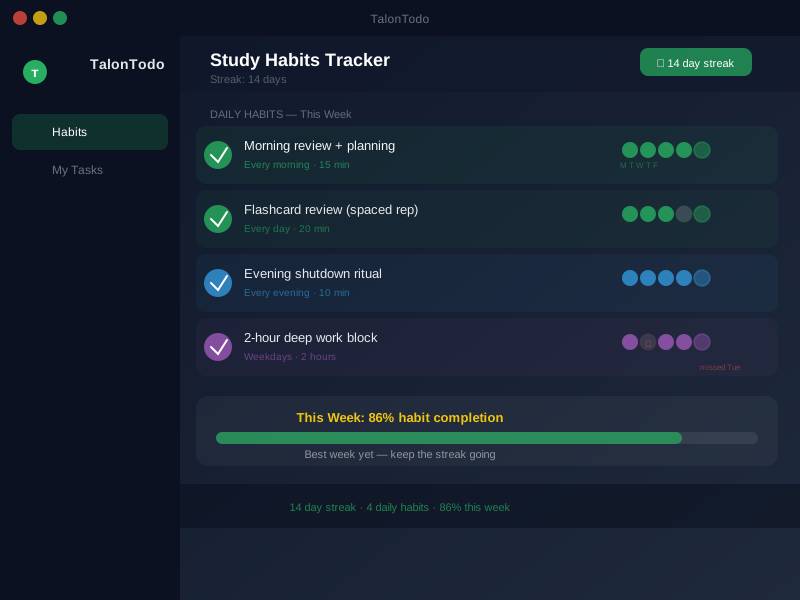
- Track your progress (I use TalonTodo to track study sessions)
- Be consistent: Miss a day? Get back on track immediately
- Adjust as needed: What works changes over time
I started with just 20 minutes of active recall practice per day. Now I have a full study system, but it took months to build.
Measuring Success
Track not just study time, but the quality of your study sessions:
Quality indicators:
- Ability to recall information without notes
- Performance on practice tests
- Understanding of concepts, not just memorization
- Reduced stress about exams
- Improved grades
I track my study sessions in TalonTodo and note what techniques I used. Over time, I can see which methods work best for me.
The Compound Effect
Small, consistent improvements compound over time. Studying 30 minutes daily for a month is 15 hours of focused learning. That adds up to significantly better understanding and retention.
I used to study in huge blocks right before exams. Now I study a little bit every day. I spend less total time studying, but I learn more and retain it better.
How TalonTodo Helps Me Study
I built TalonTodo because I needed help implementing these study techniques consistently. Here's how it helps:
Why I built it: I kept forgetting to review material using spaced repetition. I'd plan to review, but then forget. I needed a tool that would remind me and help me track what I'd studied.
How it helps: TalonTodo's recurring task feature lets me schedule reviews at increasing intervals. The smart scheduler suggests when to study based on my schedule and energy levels. The calendar integration shows my study blocks alongside other commitments.
Feature example: The study session tracker helps me log what I studied, which techniques I used, and how effective they were. Over time, I can see patterns—which subjects need more time, which study methods work best, when I'm most productive.
The app also helps me break down large study tasks into smaller pieces. Instead of "study for chemistry exam," I create specific tasks like "review chapter 5," "practice problems 1-10," "create flashcards for formulas." This makes studying less overwhelming.
Your Action Plan
Start building better study habits this week:
- Identify your biggest study challenge
- Choose one habit to implement
- Set a specific, achievable goal
- Create accountability (tell someone, track progress)
- Review and adjust after one week
Remember: study habits are skills that develop over time. Be patient with yourself as you learn and improve. Start with one technique, master it, then add another.
The goal isn't to study more—it's to study better. With the right habits, you can learn more in less time and actually retain what you learn.
A planner that matches the habit
The habit needs a place to land. The Best Free Student Planner Apps in 2026 compares the free limits, including how many classes each plan actually holds.
About the author Jackson Pearce is a student engineer and the creator of TalonTodo, a productivity app designed to help students manage projects, deadlines, and daily tasks more effectively.