Written by Jackson Pearce Student engineer and creator of TalonTodo
I used to spend 20 minutes every morning deciding what to wear. Then I'd spend another 10 minutes figuring out what to eat for breakfast. By the time I got to my desk, I'd already used up a chunk of my decision-making energy on things that didn't matter.
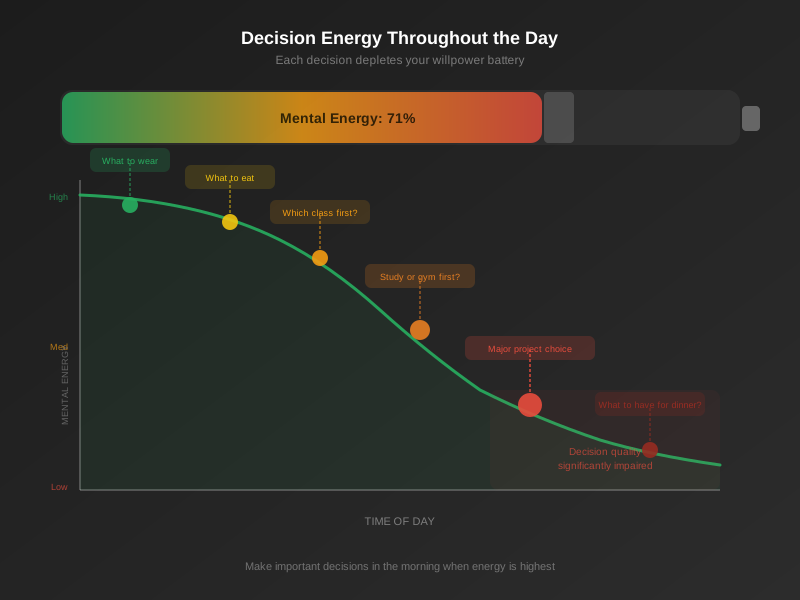
Then I read about decision fatigue—how your brain has a limited supply of willpower and decision-making energy. Every choice you make depletes it, even tiny ones. By the end of the day, after hundreds of micro-decisions, you're running on empty. That's why you make worse decisions later in the day, procrastinate more, and avoid difficult tasks.
This realization changed how I structure my days, and it's part of why I built TalonTodo. I needed a tool that would reduce decisions, not create more of them.
What Decision Fatigue Actually Is
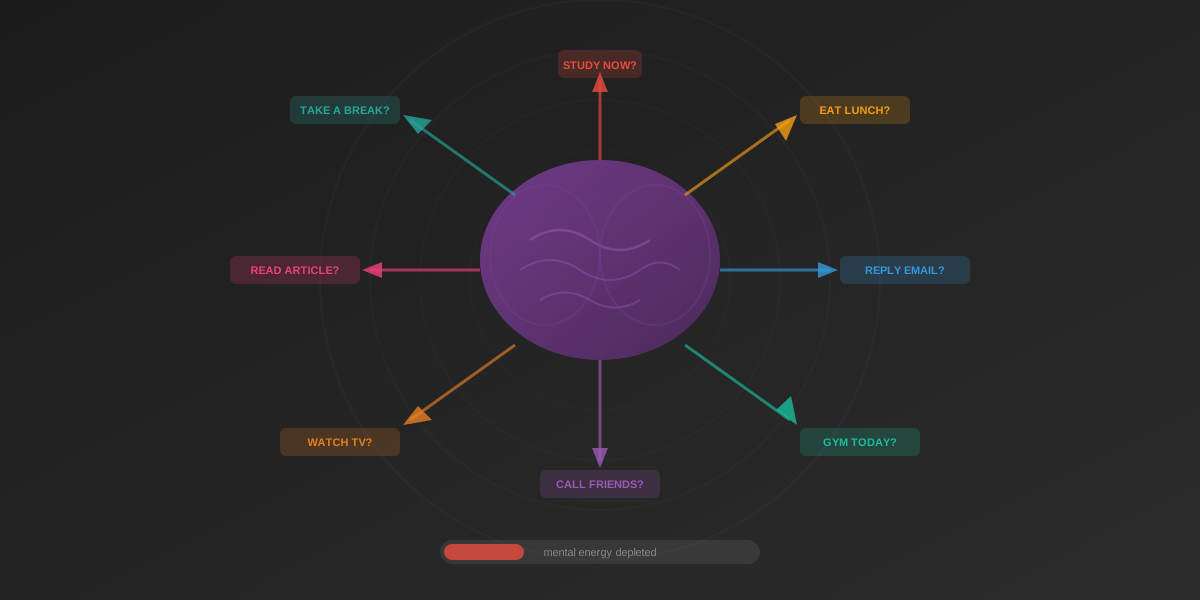
Your brain has a limited supply of willpower and decision-making energy. Every choice you make throughout the day depletes it, even tiny ones like "should I check my phone now or in 5 minutes?" or "should I work on this assignment or that one?"
As your mental energy decreases, you start making worse decisions. You're more likely to procrastinate, choose unhealthy options, and avoid difficult tasks. This is decision fatigue.
I didn't believe this at first. How could small decisions like what to wear or what to eat affect my ability to make important decisions? But the research is clear, and I've experienced it myself.
The Cost of Constant Choices
Most people don't realize how many micro-decisions they make. I tracked mine for a week, and I was shocked:
- What to wear (20+ decisions: shirt, pants, shoes, etc.)
- What to eat (3+ times a day: breakfast, lunch, dinner, snacks)
- When to check email (constantly throughout the day)
- Which task to do next (every hour, sometimes more)
- Where to work (daily: library, coffee shop, home, etc.)
- What music/podcast to listen to
- Should I take a break now?
- Should I respond to this notification?
- Should I work on this assignment or that one?
- Should I study now or later?
It adds up. Fast. By lunchtime, I'd already made hundreds of decisions, and I hadn't even gotten to my important work yet.
The Science Behind Decision Fatigue
Research shows that willpower is like a muscle—it gets tired with use. Every decision, no matter how small, uses some of that energy. By the end of the day, you have less willpower left for important decisions.
Studies have found that judges make different decisions at different times of day. Parole decisions are more favorable in the morning, when judges have more mental energy. By afternoon, after making hundreds of decisions, they're more likely to deny parole—the easier, default decision.
I noticed this in my own life. In the morning, I could tackle difficult assignments. By afternoon, I'd avoid them and do easier tasks instead. By evening, I'd procrastinate on everything and just scroll through my phone.
Reduce Decisions, Increase Output
The goal isn't to become a robot. It's to eliminate unnecessary decisions so you have energy for important ones.
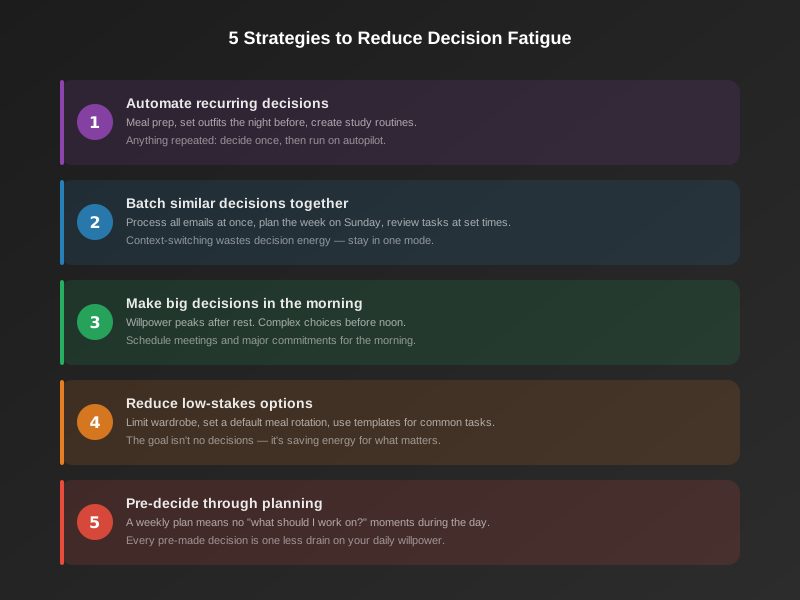
Create Routines
Same morning routine. Same work schedule. Same lunch spots. Make the repetitive parts of your life automatic.
I used to decide what to wear every morning. Now I have a simple wardrobe—mostly the same types of clothes in different colors. I grab whatever's clean. Decision eliminated.
I used to decide what to eat for breakfast every day. Now I eat the same thing every morning—oatmeal with fruit. It's healthy, it's fast, and I don't have to think about it. Decision eliminated.
I used to decide when to study. Now I study at the same times every day. Decision eliminated.
Plan Ahead
Pick your clothes the night before. Meal prep. Plan your week on Sunday. Future you will have less to decide.
I plan my entire week on Sunday. I decide what assignments to work on, when to study, when to exercise, everything. During the week, I just follow the plan. No decisions needed.
Set Defaults
Default apps, default playlists, default workspaces. The less you choose, the more you can focus.
I have default settings for everything. Default browser, default note-taking app, default study music playlist. I don't decide—I just use the defaults.
Eliminate Choices
Have two breakfast options instead of ten. Two lunch spots instead of deciding every day. A simple system instead of constantly optimizing.
I used to have dozens of apps on my phone. Now I have maybe 10 that I actually use. Less to choose from means less decision fatigue.
The 80/20 of Decisions
You probably care about 20% of your decisions. The other 80% don't matter enough to spend mental energy on.
Identify which decisions actually affect your life. Invest energy there. Automate or simplify everything else.
For me, the important decisions are:
- What assignments to prioritize
- How to approach difficult problems
- When to take breaks
- What to focus on during study sessions
Everything else—what to wear, what to eat, what app to use—I've automated or simplified.
What You'll Notice
After reducing decision-making, you'll likely notice:
- More energy for important work
- Less procrastination
- Better choices when it matters
- Feeling less overwhelmed
- Getting more done with less effort
I noticed these changes within a week of reducing decisions. I had more mental energy for my actual work. I procrastinated less. I made better choices about what to prioritize.
Practical Strategies for Reducing Decisions
Morning Routine
Create a morning routine that requires zero decisions. Same wake-up time, same activities in the same order, same breakfast, same preparation routine.
My morning routine is completely automatic. I wake up, exercise, shower, eat the same breakfast, and start work at the same time. No decisions needed until I'm actually working.
Meal Planning
Plan your meals for the week. Meal prep on Sunday. Eat the same breakfast every day. Have a rotation of 3-4 lunch options.
I meal prep on Sundays. I make breakfast for the week, prep lunch ingredients, and plan dinners. During the week, I just grab what's ready. No "what should I eat?" decisions.
Wardrobe Simplification
Simplify your wardrobe. Have a uniform or a small rotation of outfits. Pick clothes the night before.
I have maybe 10 outfits total. They're all similar styles, so I can grab anything and it works. I pick my outfit the night before, so morning decisions are eliminated.
Workspace Consistency
Have a dedicated workspace. Same place, same setup, same tools. No deciding where to work.
I have one desk where I do all my work. Same setup every day. When I sit there, my brain knows it's work time. No decisions needed.
Task Planning
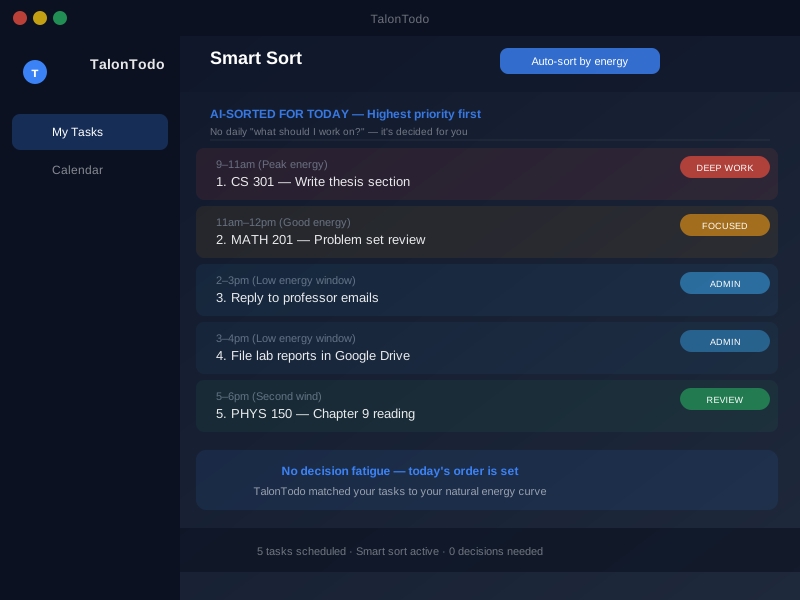
Plan your tasks in advance. Use a system that reduces daily decisions. I use TalonTodo's smart scheduler, which suggests what to work on based on my schedule and priorities.
Instead of deciding what to work on every hour, I plan my week on Sunday. The app suggests when to work on things based on deadlines and my availability. I just follow the plan.
Default Settings
Set defaults for everything. Default apps, default settings, default workflows. Don't optimize—just use what works.
I have default settings for all my apps. I don't change them. I don't optimize. I just use the defaults and focus on actual work.
Common Mistakes
I made these mistakes when I started reducing decisions:
Mistake 1: Over-Optimizing
I tried to create the "perfect" routine, the "perfect" system. But perfect doesn't exist, and trying to optimize everything created more decisions.
Solution: Good enough is good enough. Pick a system and stick with it. Don't constantly optimize.
Mistake 2: Being Too Rigid
I made my routine so rigid that any disruption threw everything off. That created stress, which defeated the purpose.
Solution: Have a routine, but allow flexibility. If something comes up, adjust. Don't stress about it.
Mistake 3: Eliminating All Decisions
I tried to eliminate every decision, which made life feel robotic and boring. That's not the goal.
Solution: Eliminate decisions that don't matter. Keep decisions that add value or joy to your life.
Mistake 4: Not Reviewing
I set up systems and never reviewed them. Some weren't working, but I kept using them because I'd eliminated the decision to change them.
Solution: Review your systems monthly. If something isn't working, change it. But don't constantly tinker.
How TalonTodo Reduces Decision Fatigue
I built TalonTodo specifically to reduce decisions. Here's how it helps:
Why I built it: I was spending too much time deciding what to work on, when to work on it, and how to prioritize. I needed a tool that would make those decisions for me, or at least make them easier.
How it helps: TalonTodo's smart scheduler suggests what to work on based on your schedule, deadlines, and priorities. Instead of deciding what to do next, the app suggests it. The priority calculator automatically ranks tasks based on urgency and importance. The calendar integration shows you when you actually have time to work.
Feature example: The daily goal feature eliminates the "am I done yet?" decision. I set a goal to complete a certain number of tasks. Once I hit it, I'm done. No deciding if I should work more or if I've done enough.
The app also reduces decisions through defaults. Default priority settings, default reminder times, default organization. I set it up once, and it works. No constant configuration needed.
Real-World Examples
Here's how I've reduced decisions in different areas:
Morning Routine
Before: 20+ decisions (what to wear, what to eat, when to start, what to work on first, etc.)
After: Zero decisions. Same routine every day. Clothes picked night before. Same breakfast. Same start time. Tasks planned in advance.
Time saved: About 30 minutes of decision-making time, plus more mental energy for actual work.
Meal Planning
Before: 3+ decisions per day about what to eat (breakfast, lunch, dinner, snacks)
After: Meals planned and prepped on Sunday. Just grab what's ready.
Time saved: About 15 minutes per day, plus no decision fatigue from food choices.
Task Management
Before: Constant decisions about what to work on, when to work on it, how to prioritize
After: Tasks planned on Sunday. Smart scheduler suggests what to work on. Just follow the plan.
Time saved: Hours per week, plus significantly more mental energy for actual work.
Workspace
Before: Deciding where to work every day (library, coffee shop, home, etc.)
After: Same workspace every day. No decision needed.
Time saved: About 10 minutes per day, plus better focus from consistent environment.
The Results
After reducing decisions consistently, I noticed:
- More mental energy: I had more willpower for important decisions and difficult work
- Less procrastination: With fewer decisions to make, I had more energy to actually do work
- Better choices: When decisions mattered, I made better ones because I had more mental energy
- Less stress: Fewer decisions meant less overwhelm
- More productivity: I got more done with less effort because I wasn't exhausting my willpower on trivial choices
The impact was significant. I went from feeling constantly drained to having energy for what actually mattered.
Getting Started
Start small. Pick one area and reduce decisions there:
- Choose one area (morning routine, meals, workspace, etc.)
- Create a system that eliminates decisions
- Stick with it for a week
- Notice the difference in your energy and productivity
- Expand to other areas gradually
Don't try to eliminate all decisions at once. That's overwhelming and you'll give up. Start with one area, master it, then add another.
The best productivity hack isn't finding more time—it's having more energy when you need it. Reduce decisions, preserve energy, do better work.
Try it this week. Pick one area where you make a lot of decisions and eliminate them. See how it feels. I bet you'll notice you have more energy for what actually matters.
About the author Jackson Pearce is a student engineer and the creator of TalonTodo, a productivity app designed to help students manage projects, deadlines, and daily tasks more effectively.