Written by Jackson Pearce Student engineer and creator of TalonTodo
I used to feel productive when I spent hours responding to emails, attending meetings, and checking things off my to-do list. I was busy all day, but I wasn't actually accomplishing anything meaningful. My important projects sat untouched while I did easy, shallow work that made me feel busy.
Then I read Cal Newport's "Deep Work" and realized I was doing everything wrong. I was spending 80% of my time on shallow work—tasks that feel productive but don't create real value. By the time I got to important work, I was too tired to do it well.
This realization changed how I structure my days, and it's part of why I built TalonTodo. I needed a tool that would help me protect time for deep work, not just track shallow tasks.
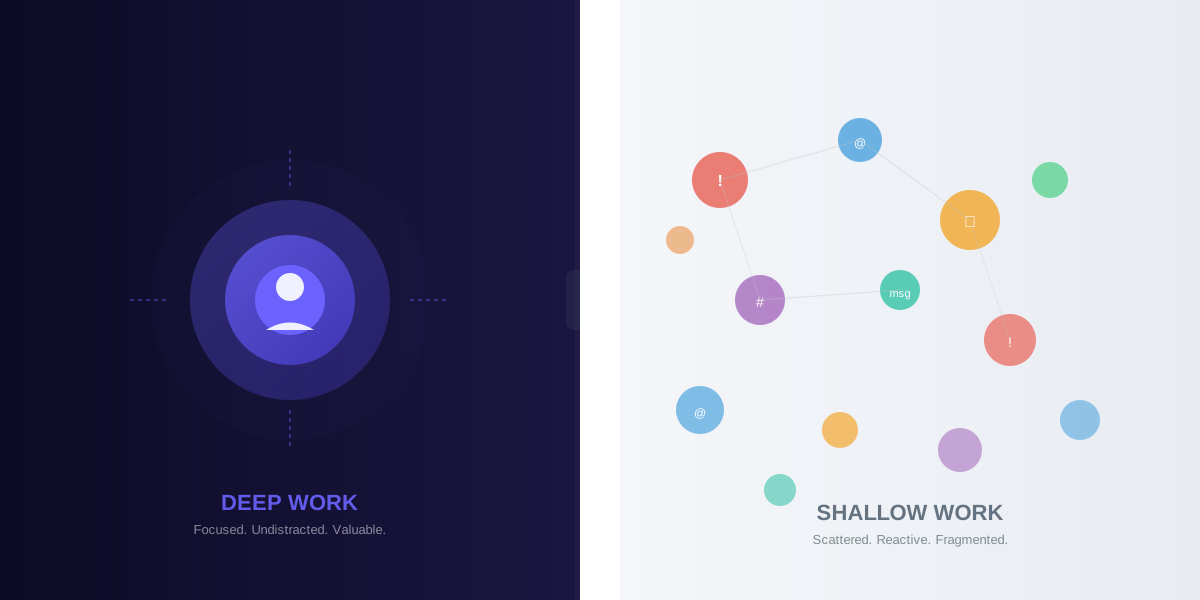
The Difference Between Deep and Shallow Work
Not all work is created equal. Understanding the difference is crucial for productivity.
Deep Work
Deep work is focused, uninterrupted time spent on cognitively demanding tasks. It's hard. It's exhausting. But it's where real progress happens.
Characteristics:
- Writing, coding, designing, analyzing
- Requires full concentration
- Creates new value
- Hard to replicate or outsource
- Makes you better at what you do
- Produces work that matters
For students, deep work might be:
- Writing a research paper
- Solving complex problems
- Learning difficult concepts
- Working on major projects
- Creating something new
Shallow Work
Shallow work feels productive. You're responding to emails, attending meetings, checking things off lists. But it doesn't move the needle on important projects.
Characteristics:
- Emails, meetings, administrative tasks
- Doesn't require much focus
- Maintains the status quo
- Easy to do but replaceable
- Keeps you busy but not better
- Produces work that's necessary but not valuable
For students, shallow work might be:
- Checking email
- Organizing notes
- Attending routine meetings
- Filling out forms
- Updating calendars
- Responding to messages
Why We Avoid Deep Work
Deep work is uncomfortable. It's hard to start. It requires sustained attention. Your brain wants the dopamine hits from checking emails or completing easy tasks.
So we default to shallow work. It feels productive. It's easier. We can do it while tired or distracted. But it doesn't create the results we actually want.
I used to start my day with email. I'd spend an hour responding to messages, feeling productive, then realize I'd used up my best energy on shallow work. By the time I got to my actual assignments, I was too tired to do them well.
The Math of Deep vs Shallow Work
Most people spend their day in shallow work. They respond to emails, attend meetings, check social media. By the time they get to important work, they're too tired to do it well.
If you're spending 80% of your time on shallow work, you're only doing meaningful work when you're exhausted. That's backwards.
The ideal ratio:
- 50-60% deep work (focused, valuable work)
- 20-30% shallow work (necessary maintenance)
- 10-20% rest and recovery
Most students do the opposite—80% shallow work, 20% deep work (and that 20% happens when they're exhausted).
Flip the Script
Schedule deep work first. Block 2-4 hours in the morning for your most important, cognitively demanding work. Then do shallow work in the afternoon when your energy is lower.
I restructured my entire schedule around this principle. I do my most important work—writing papers, solving problems, learning difficult concepts—in the morning when I'm fresh. Afternoons are for email, organizing, meetings, and routine tasks.
The difference has been huge. I get more done in less time, and the work is better quality.
Protecting Deep Work Time
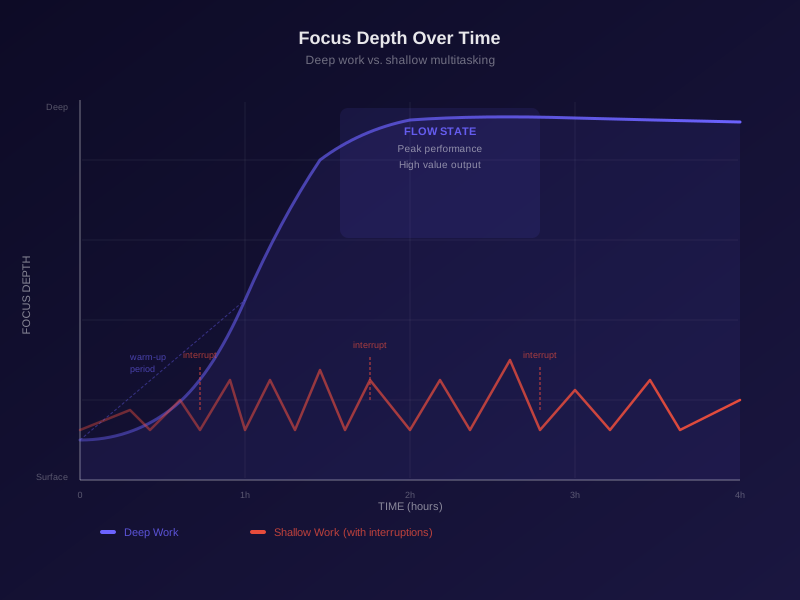
Deep work only happens if you protect it. Turn off notifications. Close email. Put your phone away. Don't let shallow work creep into your deep work blocks.
My deep work rules:
- No email during deep work blocks
- Phone in another room
- Website blockers enabled
- No meetings scheduled during deep work time
- Clear goal for what I'm working on
- Everything I need ready before I start
I treat deep work blocks like important meetings—they're non-negotiable. I don't reschedule them. I don't let shallow work interrupt them.
Making Deep Work Easier
Set yourself up for success:
Choose a Dedicated Space
Have a specific place where you do deep work. When you're there, your brain knows it's time to focus.
I have one desk where I do all my deep work. Same place, same setup, every time. The association helps me focus faster.
Eliminate Distractions Before You Start
Don't wait until you're working to eliminate distractions. Do it before you start.
I close all unnecessary tabs, put my phone in another room, enable website blockers, and set up my workspace before I begin. No decisions needed once I start.
Have Everything You Need Ready
Gather all materials before you start. Textbooks, notes, supplies, everything. Don't interrupt deep work to find something.
I prepare my workspace the night before. When I sit down in the morning, everything is ready. I can start immediately.
Start with a Clear Goal
Know exactly what you're working on. Not "work on assignment," but "write introduction paragraph for research paper" or "solve problems 1-5 in chapter 7."
Clear goals make deep work easier. You know when you're done, and you can focus on one thing at a time.
Use Rituals to Signal Deep Work Time
Create a ritual that signals your brain it's deep work time. Same routine every time.
My ritual: I make coffee, sit at my desk, close all tabs except what I need, set a timer, and start. The routine helps my brain shift into deep work mode.
Batching Shallow Work
Once you've protected your deep work time, batch all the shallow stuff. Check email twice a day. Handle administrative tasks in blocks. Keep meetings to certain days or times.
Don't let shallow work interrupt your deep work. Ever.
I batch all my shallow work into afternoon blocks. Email at 1pm and 5pm. Admin work on Friday afternoons. Meetings on Tuesdays and Thursdays. The rest of the time is protected for deep work.
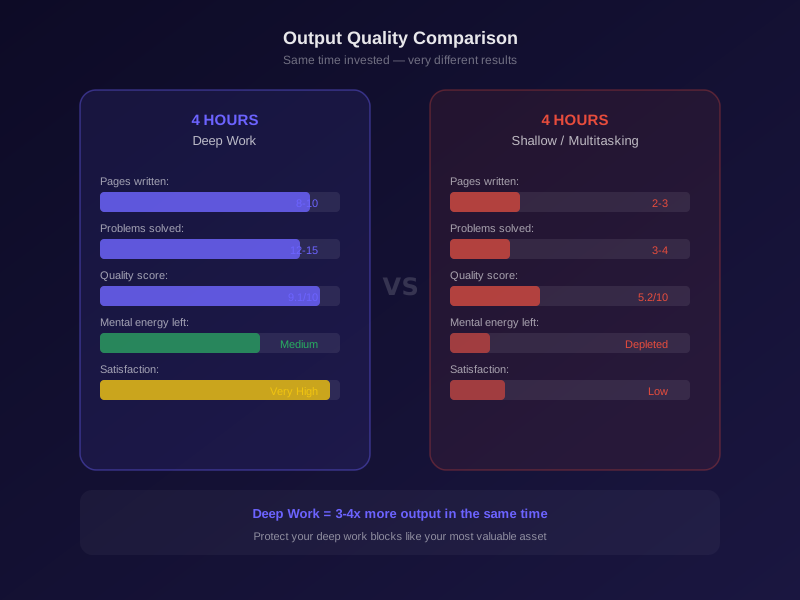
The Results of Prioritizing Deep Work
When you prioritize deep work:
- You actually complete important projects
- You get better at your craft
- You create value others can't easily replicate
- You feel more accomplished
- You progress toward meaningful goals
I noticed these changes within weeks of restructuring my schedule:
- Better quality work: Papers were better because I wrote them when I was fresh
- Faster progress: I got more done in less time because I was focused
- Less stress: Important work was done, so I wasn't constantly worried
- More satisfaction: I felt accomplished because I was doing work that mattered
Common Mistakes
I made these mistakes when I started prioritizing deep work:
Mistake 1: Not Protecting Deep Work Time
I'd schedule deep work blocks, then let shallow work interrupt them. "Just one quick email" would turn into 30 minutes of shallow work.
Solution: Treat deep work blocks as non-negotiable. No exceptions. Shallow work can wait.
Mistake 2: Scheduling Deep Work When Energy is Low
I'd schedule deep work in the afternoon when I was tired. Then I'd avoid it and do shallow work instead.
Solution: Schedule deep work during your peak energy times. For most people, that's morning. Do shallow work when energy is lower.
Mistake 3: Trying to Do Too Much Deep Work
I tried to do 8 hours of deep work per day. That's impossible. I burned out.
Solution: Aim for 3-4 hours of deep work per day. That's sustainable and effective. The rest can be shallow work or rest.
Mistake 4: Not Batching Shallow Work
I'd do shallow work throughout the day, which meant I was never fully in deep work mode.
Solution: Batch shallow work into specific blocks. Check email twice a day, not constantly.
How TalonTodo Supports Deep Work
I built TalonTodo to help me protect and prioritize deep work. Here's how it helps:
Why I built it: I needed a tool that would help me see what work was actually important (deep work) vs what was just busy work (shallow work). I also needed help protecting time for deep work.
How it helps: TalonTodo's priority system helps identify deep work vs shallow work. The smart scheduler suggests when to do deep work based on your energy levels and schedule. The calendar integration shows your deep work blocks alongside other commitments, so you can protect them.
Feature example: The focus mode feature helps protect deep work time. When you're in a deep work block, you can enable focus mode, which hides non-urgent notifications and suggests batching shallow work for later. This helps you stay focused on what matters.
The app also helps with batching shallow work. It groups similar tasks together and suggests doing them in batches, which frees up more time for deep work.
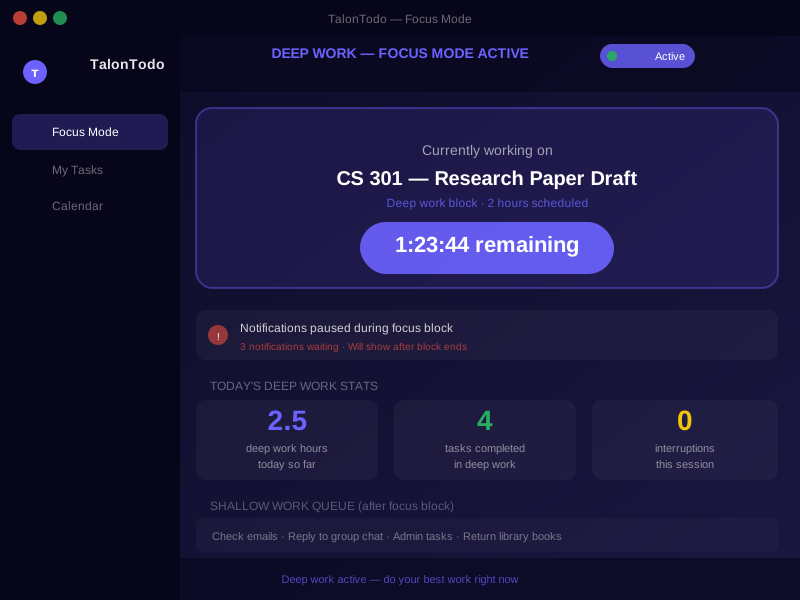
Real-World Examples
Here's how I structure my days around deep vs shallow work:
Morning (Deep Work Time)
8am-12pm: Deep work blocks
- Writing papers
- Solving complex problems
- Learning difficult concepts
- Working on major projects
- Creating something new
This is when I'm freshest, so I do my most important work here.
Afternoon (Shallow Work Time)
1pm-5pm: Shallow work blocks
- Email (1pm and 5pm)
- Organizing notes
- Routine meetings
- Administrative tasks
- Review and planning
This is when my energy is lower, so I do maintenance work.
Evening (Rest or Light Work)
After 5pm: Rest or very light work
- Light reading
- Review completed work
- Planning for next day
- Personal time
I don't do deep work in the evening. That's time for rest and recovery.
Getting Started
Try it this week. Schedule 2 hours of deep work every morning. Protect it fiercely. See what you actually accomplish.
Steps to get started:
- Identify your deep work (what actually creates value?)
- Schedule it first (morning, when energy is high)
- Protect it (no interruptions, no shallow work)
- Batch shallow work (afternoon blocks for email, admin, etc.)
- Track the results (how much did you actually accomplish?)
Start with 2 hours per day. That's manageable and you'll see results quickly. Once you experience the difference, you'll want to protect more time for deep work.
Your future self will thank you. Deep work is where real progress happens. Everything else is just maintenance.
About the author Jackson Pearce is a student engineer and the creator of TalonTodo, a productivity app designed to help students manage projects, deadlines, and daily tasks more effectively.