Written by Jackson Pearce Student engineer and creator of TalonTodo
I used to start every day by looking at my task list and feeling overwhelmed. Dozens of assignments, readings, projects—all competing for my attention. I'd work on whatever felt most urgent, which usually meant whatever was due soonest, regardless of importance. I was constantly putting out fires instead of making real progress.
Then I learned about prioritization frameworks, and everything changed. I realized that not all tasks are created equal. Some assignments are worth 50 points. Some are worth 10. Some are prerequisites for bigger projects. Some can wait. Understanding this was a game-changer, and it's part of why I built TalonTodo—I needed a tool that would help me see what actually mattered, not just what was due soonest.

Why Prioritization Actually Matters
Prioritization isn't about doing more—it's about doing the right things at the right time. When you prioritize effectively, you focus your energy on high-impact activities, meet critical deadlines without panic, reduce stress and decision fatigue, and achieve better results with less effort.
I used to think being busy meant being productive. I'd work on easy tasks first, checking things off my list, feeling accomplished. But at the end of the day, I hadn't made progress on anything important. I was busy, but not effective.
Now I prioritize, and the difference is huge. I focus on what matters most, and I get more done in less time. More importantly, I make progress on things that actually move the needle.
Understanding Task Priority
Not all tasks are created equal. Priority is determined by two key factors:
Urgency: How soon does this need to be done? Importance: How much does this matter for your goals?
The most effective prioritization systems consider both factors together. A task due tomorrow isn't necessarily more important than a task due next week. A 10-point homework isn't more important than a 50-point project, even if it's due sooner.
I used to prioritize by due date only. If something was due tomorrow, I'd work on it, even if it was worth 5 points and I had a 100-point project due next week. That was backwards.
The Eisenhower Matrix: A Time-Tested Framework
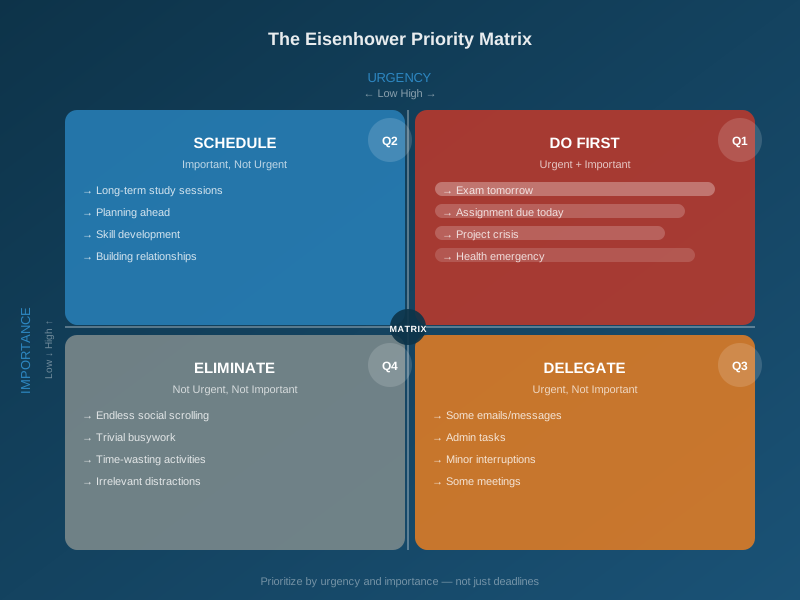
The Eisenhower Matrix categorizes tasks into four quadrants. This framework changed how I think about my work.
Quadrant 1: Urgent and Important (Do First)
These are your crises and critical deadlines. They demand immediate attention.
Examples:
- Exams tomorrow
- Assignments due today
- Emergency academic issues
Strategy: Minimize these by planning ahead. When possible, convert Quadrant 2 tasks to prevent them from becoming urgent.
I used to live in Quadrant 1. Everything was urgent because I waited until the last minute. Now I plan ahead, and I rarely have true emergencies.
Quadrant 2: Important but Not Urgent (Schedule)
These activities contribute to long-term success. They're often neglected but have the highest impact.
Examples:
- Long-term projects
- Regular study sessions
- Skill development
- Health and wellness
Strategy: These deserve dedicated time in your schedule. Block out time for them regularly.
This is where I try to spend most of my time now. Working on important but not urgent tasks prevents them from becoming urgent crises.
Quadrant 3: Urgent but Not Important (Delegate/Limit)
These tasks feel pressing but don't significantly contribute to your goals.
Examples:
- Unnecessary meetings
- Social media notifications
- Some emails or messages
Strategy: Delegate when possible, or limit the time you spend on them.
I used to let these tasks consume my day. Now I batch them and limit the time I spend on them.
Quadrant 4: Neither Urgent nor Important (Eliminate)
These are time-wasters that provide little value.
Examples:
- Excessive social media scrolling
- Unproductive web browsing
- Busywork that doesn't matter
Strategy: Eliminate these activities from your schedule.
I've eliminated most of these. Life is too short to waste time on things that don't matter.
Practical Prioritization Methods
The ABCDE Method
Assign each task a letter based on importance:
- A tasks: Must be done (high priority)
- B tasks: Should be done (medium priority)
- C tasks: Nice to do (low priority)
- D tasks: Delegate if possible
- E tasks: Eliminate
Within each category, number tasks (A1, A2, etc.) to show order of execution.
I use this method when I have a lot of tasks to organize. It helps me see what's truly important vs what can wait.
The 1-3-5 Rule
Each day, plan to complete:
- 1 big task (major assignment, exam prep)
- 3 medium tasks (readings, smaller assignments)
- 5 small tasks (quick emails, organization, reviews)
This provides structure while maintaining flexibility. I use this on days when I have a lot to do. It prevents me from overcommitting while ensuring I make progress on important work.
Value vs. Effort Matrix
Consider both the value (importance) and effort (time/energy required) of each task:
High Value, Low Effort: Quick wins—do these first High Value, High Effort: Important projects—schedule dedicated time Low Value, Low Effort: Fill-in tasks—do when you have spare time Low Value, High Effort: Avoid these—they're not worth the effort
This matrix helps me decide what to work on when. Quick wins build momentum. High-value, high-effort tasks get scheduled blocks. Low-value tasks get eliminated or batched.
Prioritizing Academic Assignments
For students, prioritization needs to consider multiple factors:
Factor 1: Due Date
Obviously, tasks due soonest get priority. But don't stop there—consider the other factors too.
Factor 2: Point Value or Weight
A 50-point project deserves more attention than a 10-point homework. Weight assignments by their impact on your grade.
I used to ignore this. I'd spend hours on a 10-point homework while neglecting a 50-point project. Now I weight by points, and my grades improved.
Factor 3: Difficulty
Difficult assignments often require more time. Start early to avoid last-minute stress.
I start difficult assignments early, even if they're not due soon. This prevents them from becoming crises.
Factor 4: Prerequisites
Some tasks unlock others. Complete prerequisite work first to maintain momentum.
If Assignment B depends on Assignment A, I do A first. This maintains momentum and prevents blockers.
Factor 5: Personal Goals
Consider which assignments align with your learning goals and long-term objectives.
Some assignments teach skills I want to develop. Others are just busywork. I prioritize the ones that align with my goals.
Daily Prioritization Routine
Morning Review (5 minutes)
Each morning, I review my task list and:
- Identify my top 3 priorities for the day
- Estimate time needed for each
- Schedule time blocks accordingly
- Adjust as needed based on energy levels
This 5-minute routine sets me up for a productive day. I know exactly what to work on and when.
Evening Review (5 minutes)
At the end of each day:
- Check what I accomplished
- Identify what needs attention tomorrow
- Adjust priorities for the next day
- Celebrate wins
This helps me end the day feeling accomplished and start the next day with clarity.
Advanced Prioritization Strategies
Energy-Based Prioritization
Match tasks to your natural energy rhythms. I'm a morning person, so I do my most important, difficult work in the morning. Afternoons are for routine tasks. Evenings are for light work or rest.
High energy periods: Tackle difficult or creative work Medium energy periods: Handle routine tasks Low energy periods: Do simple, low-stakes activities
The 2-Minute Rule
If a task takes less than 2 minutes, do it immediately rather than adding it to your list. This prevents small tasks from accumulating and becoming overwhelming.
I use this constantly. Quick emails, filing papers, adding events to calendar—I do them immediately. This keeps my task list focused on important work.
Batching Similar Tasks
Group similar activities together. Process all emails at once, make all phone calls in one session, complete all readings for one class together.
Batching reduces context-switching and increases efficiency. I batch similar tasks, which frees up more time for important work.
Common Prioritization Mistakes
I've made all of these mistakes. Learn from them:
Treating everything as urgent: Not all tasks need immediate attention. Learn to distinguish urgency from importance.
Ignoring important but non-urgent tasks: These often have the biggest long-term impact. Schedule time for them.
Being reactive instead of proactive: Don't let your inbox or notifications dictate your priorities. Be intentional.
Overestimating capacity: You can't do everything. Be realistic about what's achievable.
Perfectionism: Done is better than perfect. Prioritize completion over perfection on lower-stakes tasks.
How TalonTodo Helps Me Prioritize
I built TalonTodo because I needed help prioritizing effectively. Here's how it helps:
Why I built it: I was overwhelmed by task lists that didn't help me see what actually mattered. I needed a tool that would automatically prioritize based on multiple factors, not just due dates.
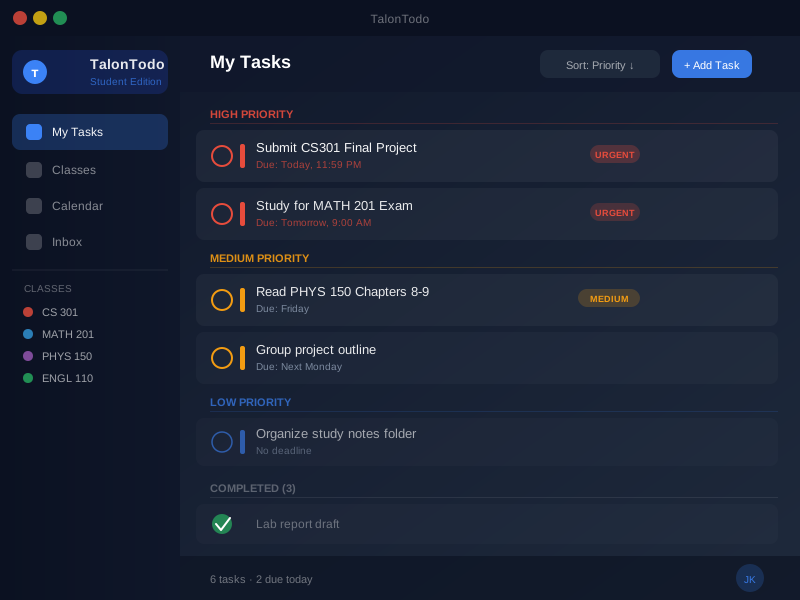
How it helps: TalonTodo's priority calculator considers due date, point value, difficulty, prerequisites, and your goals. It automatically scores tasks and suggests what to work on next. The smart scheduler looks at your actual availability and suggests when to work on high-priority tasks.
Feature example: The "Do This Next" feature shows your top 3 priorities based on the priority algorithm. Instead of scrolling through a long list, you see what actually matters. The calendar integration shows how priorities fit into your schedule, so you can see conflicts before they happen.
The app also helps with energy-based prioritization. It tracks when you're most productive and suggests scheduling important work during those times. This ensures you're working on the right things at the right times.
Building Prioritization Habits
Like any skill, prioritization improves with practice:
- Start small: Use one prioritization method consistently
- Review regularly: Check what's working and adjust
- Be flexible: Priorities can change—adapt as needed
- Reflect: Learn from successes and challenges
I started with the Eisenhower Matrix. Once I mastered it, I added other methods. Now I use a combination that works for me.
The Impact on Your Academic Success
Effective prioritization transforms your academic experience:
- Better grades: Focus on high-impact activities
- Less stress: Clear sense of what matters
- More free time: Efficiency creates space
- Improved confidence: Feeling in control
- Better work-life balance: Time for what you enjoy
Since I started prioritizing effectively, my grades improved, my stress decreased, and I have more free time. The impact has been huge.
Your Action Plan
Ready to prioritize more effectively? Start this week:
- List all your current tasks and assignments
- Apply the Eisenhower Matrix to categorize them
- Identify your top 3 priorities each day
- Schedule time for Quadrant 2 activities
- Review and adjust at the end of the week
Remember: prioritization is a skill that develops over time. Be patient with yourself as you learn and improve.
Start with one method. Master it. Then add another. The goal isn't perfect prioritization—it's better prioritization than you have now.
Put the priority on a dated list
A ranking that stays in your head does not survive the week. A Free Assignment Tracker for Students attaches each piece of work to its class and its due date, so the top of the list is the thing that is actually next.
About the author Jackson Pearce is a student engineer and the creator of TalonTodo, a productivity app designed to help students manage projects, deadlines, and daily tasks more effectively.