Written by Jackson Pearce Student engineer and creator of TalonTodo
I used to say yes to everything. Study group? Yes. Extra project? Yes. Coffee meeting? Yes. Volunteer opportunity? Yes. I thought being helpful and available would make me successful. Instead, it made me overwhelmed, constantly behind, and unable to focus on what actually mattered.
Then I realized: every yes is a no to something else. When I said yes to that extra meeting, I was saying no to focused work time. When I said yes to that volunteer opportunity, I was saying no to my own projects. When I said yes to everything, I was saying no to my priorities.
Learning to say no was one of the hardest but most important skills I've developed. It's also part of why I built calendar integration into TalonTodo—I needed to see my actual availability before saying yes to anything.
The Hidden Cost of Yes
That "quick" meeting? It's not just 30 minutes. It's the time to prepare (even if just mentally), the commute/transition time, the recovery time to refocus afterward, and the mental space it occupies before and after.
A 30-minute meeting often costs 90 minutes of productive time. Multiply that by a few requests per week and you've lost entire days.
I learned this the hard way. I'd say yes to a "quick 30-minute meeting," but it would actually cost me:
- 15 minutes to prepare mentally
- 10 minutes to get there and settle in
- 30 minutes for the actual meeting
- 15 minutes to get back and refocus
- Mental space before and after thinking about it
That's 70 minutes, plus the mental cost of context switching. One "quick" meeting could derail my entire afternoon.
Why We Say Yes
We say yes because we want to be helpful, we don't want to disappoint people, we're afraid of missing opportunities, we haven't clarified our priorities, and saying no feels uncomfortable.
I said yes for all these reasons. I wanted people to like me. I didn't want to seem lazy or unhelpful. I was afraid of missing out on opportunities. I hadn't clarified what actually mattered to me. And saying no felt awkward and uncomfortable.
But here's the thing: saying yes to everything means doing nothing well. It means constant context switching, no time for deep work, and perpetual stress. I was busy all the time, but I wasn't making progress on anything important.
How to Say No (Without Being a Jerk)
You don't have to be rude. Here are some graceful ways to decline that I've learned:
"I can't commit to that right now, but thanks for thinking of me." Simple, clear, appreciative. This works for most situations.
"That's not something I can take on right now, but [specific person/resource] might be able to help." Decline but offer an alternative. This shows you're still helpful, just not available.
"I'm focused on [specific project] right now, so I need to pass on this." Shows you have priorities, not that you're lazy. This is my go-to response.
"Let me check my calendar and get back to you." Buys you time to think before deciding. I use this when I need to evaluate if something fits my priorities.
The key is being clear and respectful. You don't owe anyone a long explanation, but you also don't need to be dismissive.
Know Your Priorities First
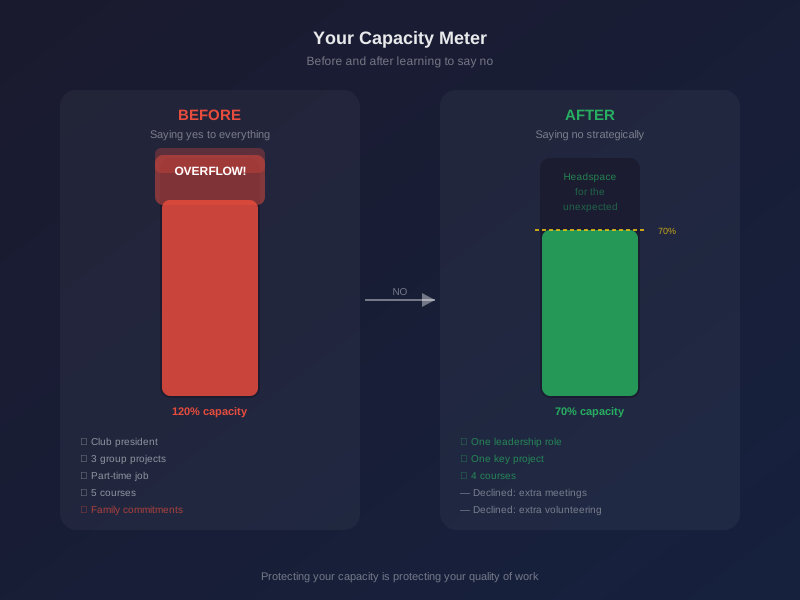
You can't say no effectively if you don't know what you're saying yes to. Get clear on your priorities:
- What are your most important goals?
- What work actually moves the needle?
- What can only you do?
- What would you do if you had more time?
When you're clear on your priorities, saying no becomes easier because you know what you're protecting.
I spent a weekend clarifying my priorities. I wrote down my goals, identified what work actually mattered, and decided what I wanted to focus on. Once I had that clarity, saying no became much easier. I could evaluate requests against my priorities and decline confidently.
The Default Should Be No
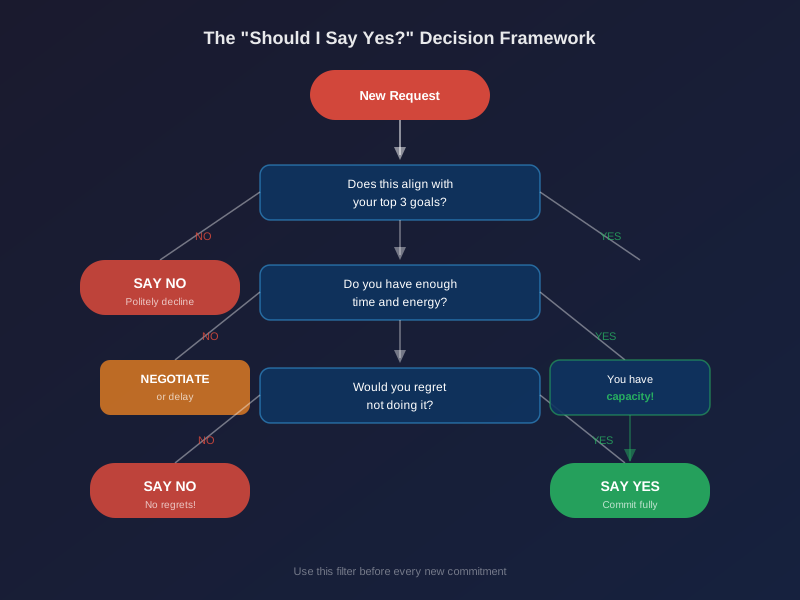
For most things, the default answer should be no. That doesn't mean you never say yes—it means you evaluate each request against your priorities.
Does this align with my goals? Does this move me forward? Is this the best use of my time right now?
If not, no.
I've shifted my default from yes to no. Now when someone asks me to do something, my first thought is "Does this align with my priorities?" If not, I say no. This has freed up hours every week.
Practice
Start saying no to small things. Practice makes it easier. You'll find that most people are fine with it. They'll respect your boundaries if you respect them yourself.
I started by saying no to small things: extra meetings, unnecessary events, low-priority requests. As I got comfortable, I started saying no to bigger things. Now it's a skill I use regularly.
And the people who get upset? They're probably the ones asking for too much anyway. I've found that reasonable people respect reasonable boundaries.
The Freedom
There's incredible freedom in saying no. You suddenly have time for what matters. You're not constantly behind. You can focus. You can do deep work. You can actually accomplish things.
Since I started saying no more often, I've noticed:
- More time for important work
- Less stress and overwhelm
- Better quality work (because I can focus)
- More progress on my goals
- Better work-life balance
The freedom to say no has been transformative. I'm no longer at the mercy of other people's priorities.
Real-World Examples
Here's how I apply saying no in different situations:
Study Groups
Before: I'd say yes to every study group invitation, even when I didn't need it or it conflicted with my schedule.
After: I evaluate: Do I actually need this study group? Does it fit my schedule? Does it align with my learning style? If not, I say no politely.
Extra Projects
Before: I'd say yes to every extra project or opportunity, thinking it would help my resume.
After: I evaluate: Does this project align with my goals? Do I have time for it? Will it help me learn what I want to learn? If not, I decline.
Social Invitations
Before: I'd say yes to every social invitation, afraid of missing out or disappointing people.
After: I evaluate: Do I want to do this? Do I have time? Will it recharge or drain me? I say yes to things I genuinely want to do, and no to things I don't.
Meetings
Before: I'd say yes to every meeting, thinking I needed to be involved in everything.
After: I evaluate: Do I need to be at this meeting? Can I contribute? Is there a better use of my time? I decline meetings that don't require my presence.
How TalonTodo Helps Me Say No
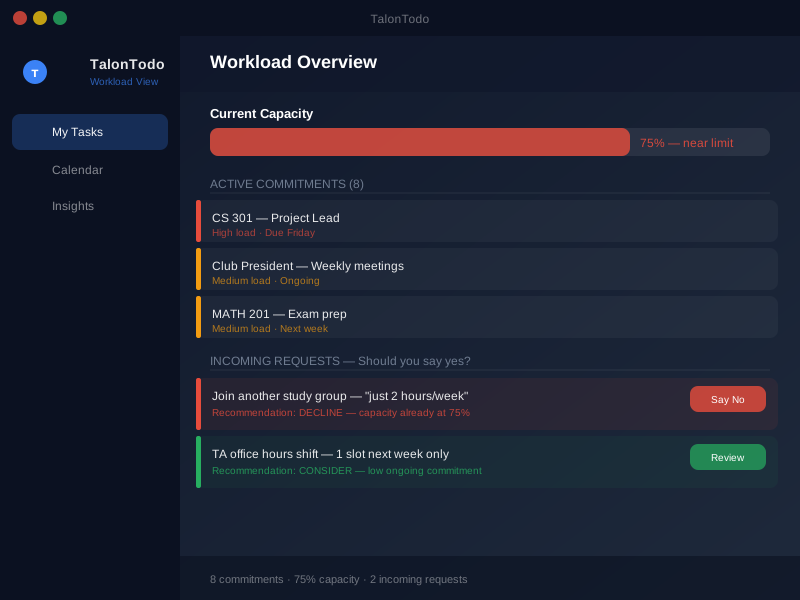
I built calendar integration into TalonTodo specifically to help with this problem. Here's how it helps:
Why I built it: I needed to see my actual availability before saying yes to anything. When someone asked me to do something, I wanted to check my calendar and see if I actually had time, not just guess.
How it helps: TalonTodo's calendar integration shows all my commitments in one view. When someone asks me to do something, I can check my calendar and see my actual availability. If my calendar is full, I can confidently say no. If I have time, I can evaluate if the request aligns with my priorities.
Feature example: The availability view shows when I'm actually free vs when I'm busy. When someone asks "Can you meet Tuesday afternoon?", I can check my calendar and see if I'm free. If I'm not, I can say no confidently. If I am, I can evaluate if the meeting aligns with my priorities before saying yes.
The app also helps with priority evaluation. I can see what I'm already committed to and evaluate if new requests fit. If my calendar is full of important work, I can decline new requests knowing I'm protecting my priorities.
Common Mistakes
I made these mistakes when I started saying no:
Mistake 1: Being Too Abrupt
I'd say "No" without explanation, which came across as rude.
Solution: Be polite but clear. "I can't commit to that right now, but thanks for thinking of me."
Mistake 2: Over-Explaining
I'd give long explanations for why I was saying no, which invited negotiation.
Solution: Keep it brief. You don't owe anyone a long explanation.
Mistake 3: Feeling Guilty
I'd feel guilty after saying no, which made me want to say yes next time.
Solution: Remember that saying no protects your priorities. You're not being selfish—you're being strategic.
Mistake 4: Not Following Through
I'd say no, then change my mind later, which undermined my boundaries.
Solution: Once you say no, stick with it. Changing your mind teaches people that "no" doesn't mean no.
Building the Skill
Saying no is a skill that improves with practice. Start small:
- Say no to one small thing this week
- Notice how it feels (probably uncomfortable at first)
- Notice the results (probably more time and less stress)
- Practice regularly until it becomes easier
- Expand to bigger things as you get comfortable
I started by saying no to small requests. As I got comfortable, I started saying no to bigger things. Now it's a skill I use regularly, and it's transformed my productivity.
The Results
Since I started saying no more often:
- More time: I have hours more time every week for important work
- Less stress: I'm not constantly overcommitted
- Better focus: I can do deep work without constant interruptions
- More progress: I'm making real progress on my goals
- Better balance: I have time for work and life
The impact has been huge. Saying no has given me the freedom to focus on what actually matters.
Getting Started
Try it this week. Say no to three things you normally would have said yes to. See what happens. I bet you'll find you have more time and less stress.
Your time is your most valuable asset. Guard it accordingly. Every yes is a no to something else. Make sure you're saying yes to the right things.
About the author Jackson Pearce is a student engineer and the creator of TalonTodo, a productivity app designed to help students manage projects, deadlines, and daily tasks more effectively.