Written by Jackson Pearce Student engineer and creator of TalonTodo
For most of my first two years in college, my mornings went like this: alarm goes off, I hit snooze three times, I open my phone in bed and spend 20 minutes scrolling, I rush to get dressed, I grab breakfast on the run, I arrive at my first class already distracted and behind.
By 9am I was reactive. Already behind on messages I'd seen in bed. Already anxious from news I'd consumed. Already tired from poor sleep and worse wakeup habits. The rest of the day was just damage control.
I changed my morning routine in January of my junior year. The difference was immediate and significant. My mornings now set me up instead of setting me back. Here's what I changed and why it worked.
Why Mornings Matter More Than You Think
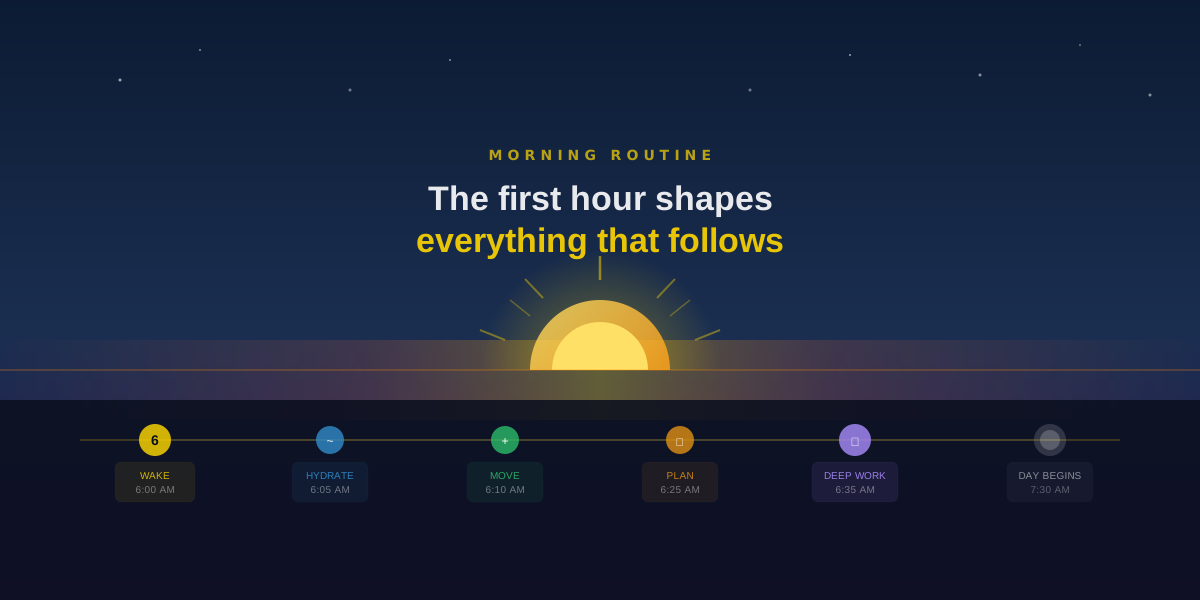
The first hour of your day shapes your mental state, your energy, and your focus for everything that follows. This isn't motivational fiction—it's how your brain works.
Cortisol and Morning Energy
Cortisol naturally peaks in the first 30-60 minutes after waking. This is called the cortisol awakening response, and it's your body preparing you for the demands of the day. If you use that window well, you get a natural energy and focus boost. If you spend it scrolling or snoozing, you blunt it.
Decision Fatigue Starts at Zero
Every decision you make costs a small amount of mental energy. By designing your morning, you eliminate a whole category of decisions before your day starts—what to do first, how long to spend on things, what the plan is. You show up to your day with a full tank rather than already depleted.
Tone Setting
Your first experience of the day sets a tone that carries forward. A rushed, reactive morning produces a rushed, reactive day. A calm, intentional morning produces a calmer, more intentional day. The morning is the frame through which everything else is viewed.
What Not to Do First
Before talking about what works, it's worth being clear about what doesn't.
Don't Check Your Phone First Thing
Checking your phone in bed—email, social media, messages, news—hands control of your attention to other people's agendas before you've had a single intentional thought. You start the day reactive rather than proactive, and that state is hard to recover from.
I put my phone across the room before bed so I can't check it without physically getting up. By the time I'm up, the urge has passed.
Don't Snooze
Every snooze cycle starts a new sleep cycle your body won't finish. You wake up groggier than if you'd just gotten up on the first alarm. The 9 minutes of broken sleep aren't rest—they're torture.
Decide your wake time the night before. Set one alarm. Get up when it goes off. This is harder to start but feels dramatically better within two weeks.
Don't Start with Passive Consumption
Scrolling, watching, browsing—these activities require nothing of you and prime your brain for passive consumption, not active thinking. Save them for downtime.
The Components of an Effective Morning Routine
A good morning routine doesn't have to be long. Mine takes about 45 minutes. Here's what it includes.
Wake Intentionally
I get up at the same time every day—including weekends. This is the single biggest change I made, and the single most impactful. A consistent wake time stabilizes your sleep cycle, improves sleep quality, and makes mornings feel less like a battle.
Getting up at the same time on weekends feels like a sacrifice at first. After a few weeks it feels normal. After a few months, your body wakes up naturally around that time anyway.
Move Your Body (5-10 minutes)
I don't do a full workout in the morning—I do 5-10 minutes of movement. Stretching, a short walk, some push-ups. Just enough to get blood moving and signal to my body that the day has started.
This doesn't need to be structured or elaborate. Walk around the block. Do 20 jumping jacks. Stretch for 5 minutes. The point is to shift from horizontal rest mode to vertical active mode.
Hydrate Before Caffeine
You've been asleep for 7-8 hours without water. You wake up mildly dehydrated. Drinking 16 oz of water before coffee or tea makes a noticeable difference in how alert you feel in the first hour.
I keep a water bottle on my nightstand. It's the first thing I reach for.
Eat Something (Even Small)
Your brain runs on glucose. Skipping breakfast or waiting until noon to eat is running a high-performance machine on empty. Even a small meal—a piece of fruit, some eggs, yogurt—gives your brain what it needs for focused work.
This doesn't need to be elaborate. It needs to exist.
The 5-Minute Planning Session
This is the most impactful part of my morning. Before I start anything, I spend 5 minutes reviewing my day in TalonTodo.
I look at:
- What's on my calendar today
- What tasks I planned for today
- What my top 3 priorities are
- What I want to accomplish before noon
This gives me a clear picture of what the day looks like before it starts. I know what I'm doing and when. I don't have to figure it out mid-morning when I'm already behind.
Without this, I start my day vaguely, drifting toward whatever feels urgent or easy. With it, I start my day with a clear plan that reflects what actually matters.
One Thing Before Distractions
After planning, I do one meaningful task before I open email, social media, or any reactive work. Usually 30-45 minutes of deep work—writing, studying, working on a project.
This protects my best cognitive time for my most important work. By the time I've checked email, the morning's peak focus window has passed. Doing one valuable thing first means that no matter how the rest of the day goes, I've already made real progress.
Designing Your Routine
Your routine should fit your life. Here are the principles for designing one that sticks.
Start Small
Don't redesign your entire morning at once. Pick one change. Do it for two weeks. Then add another.
I started with just the consistent wake time. That was it for two weeks. Then I added water first thing. Then the 5-minute planning session. Each change built on the last. After two months I had a real routine.
Make It Sustainable
A morning routine you can maintain beats an ambitious one you abandon. If your current schedule doesn't allow for a 90-minute morning ritual, don't design one. A 20-minute routine done consistently is vastly better than a perfect routine done occasionally.
Protect It
Once you have a routine that works, protect it. Don't schedule early morning commitments that disrupt it. Don't let social media creep back into the first hour. The routine is valuable precisely because it's consistent.
Prepare the Night Before
Your morning routine actually starts the night before. Setting out what you'll wear, preparing your breakfast, reviewing your plan for tomorrow, putting your phone across the room—these choices eliminate morning friction and make the routine easier to execute.
I spend 10 minutes before bed doing a small "tomorrow setup": pack my bag, check my calendar for tomorrow, identify my top task for the morning, set my wake alarm. The morning runs smoother when the path is already cleared.
Common Objections (And Answers)
"I'm not a morning person."
Morning person is a trait that's partially genetic but mostly habitual. Your circadian preferences can shift. More importantly, the principles here—consistency, intentionality, protecting your best energy for your best work—apply regardless of what time you wake up. If you genuinely work better in the evening, apply these principles to your evening schedule.
"My schedule is inconsistent."
Variable class schedules, late nights, different obligations each day—student schedules are chaotic. Work with what you have. A routine that applies on three consistent mornings per week is worth more than nothing. Find the mornings you can control and control them.
"I don't have enough time."
If you wake up 15 minutes earlier, you have time for water, movement, and a 5-minute planning session. That's it. That's enough to meaningfully change your mornings. Start there.
How TalonTodo Fits Into the Morning
The 5-minute morning planning session I described is much faster when your task system is well-maintained. If your TalonTodo is up to date—tasks entered, due dates set, priorities assigned—the morning review takes 5 minutes. If you're trying to reconstruct your day from memory and scattered notes, it takes 20.
I do a brief "capture" session at the end of each day to make sure everything is in the system. Then the morning review is just a quick check: what's on the calendar, what are my top tasks, what do I want to accomplish first.
The app's daily schedule view was built specifically for this. It shows your day's tasks and calendar events in one view, so you can see at a glance what the day holds and set your priorities before you start.
The Cumulative Effect
A morning routine doesn't produce dramatic results on day one. It produces compounding results over months.
After one month of consistent mornings, I noticed I was calmer, more organized, and more productive before noon than I'd previously been all day. After three months, the routine was automatic—I didn't have to decide to do it, I just did it.
The changes are small daily. The effects are large over time.
Start tomorrow. Pick one thing. Do it consistently. Add more when that first thing is solid. You don't need a perfect morning routine. You need a real one.
About the author Jackson Pearce is a student engineer and the creator of TalonTodo, a productivity app designed to help students manage projects, deadlines, and daily tasks more effectively.