Written by Jackson Pearce Student engineer and creator of TalonTodo
My first semester of college was chaos. I had classes scattered across different buildings, assignments due at random times, study groups that conflicted with work, and no system to keep track of anything. I was constantly surprised by deadlines, double-booked myself constantly, and felt like I was always behind.
Then I learned that organization isn't about being perfect—it's about having systems that work. I created a simple organizational system that transformed my academic life. That system became the foundation for TalonTodo, because I needed a tool that would help me see everything in one place and never miss a deadline again.
The Foundation: Understanding Your Academic Cycle
Before diving into organization strategies, it's crucial to understand the rhythm of your academic year. Each semester has distinct phases that require different organizational approaches.
Key phases:
- Week 1-2: Orientation and syllabus review
- Week 3-8: Regular coursework and midterms
- Week 9-12: Intensive studying and project work
- Week 13-16: Finals preparation and exams
I used to treat every week the same. Now I adjust my organization based on where I am in the semester. Early weeks are for setting up systems. Middle weeks are for maintaining them. Late weeks are for intensive work and review.
Building Your Organizational System
Centralize Everything
The first rule of organization: keep everything in one place. Whether you prefer digital tools or physical planners, choose one primary system and stick to it.
What to include:
- Class schedules and locations
- Assignment due dates
- Exam dates
- Important deadlines
- Personal commitments
I used to have information scattered across notebooks, phone notes, email, and my head. Now everything is in TalonTodo. One place, one system, no confusion.
Create a Semester Overview
At the beginning of each semester, create a comprehensive overview of all your commitments. List all your classes with meeting times, mark all known exam dates, add major assignment deadlines, include university holidays and breaks, and note personal commitments (work, events, etc.).
I do this during syllabus week. I go through every syllabus, extract all deadlines, and enter them into TalonTodo. Takes an hour, but it sets me up for the entire semester.
Use a Weekly Template
A weekly template provides structure and reduces decision-making. Create a template based on your class schedule, then duplicate it each week.
Elements of an effective weekly template:
- Fixed commitments (classes, work, meetings)
- Flexible study blocks for each class
- Time for assignments and projects
- Buffer time for unexpected tasks
- Personal time and activities
I have a weekly template in TalonTodo. Every Sunday, I duplicate it and adjust for the week's specific needs. Takes 10 minutes, saves hours of decision-making during the week.
Color-Code by Priority or Class
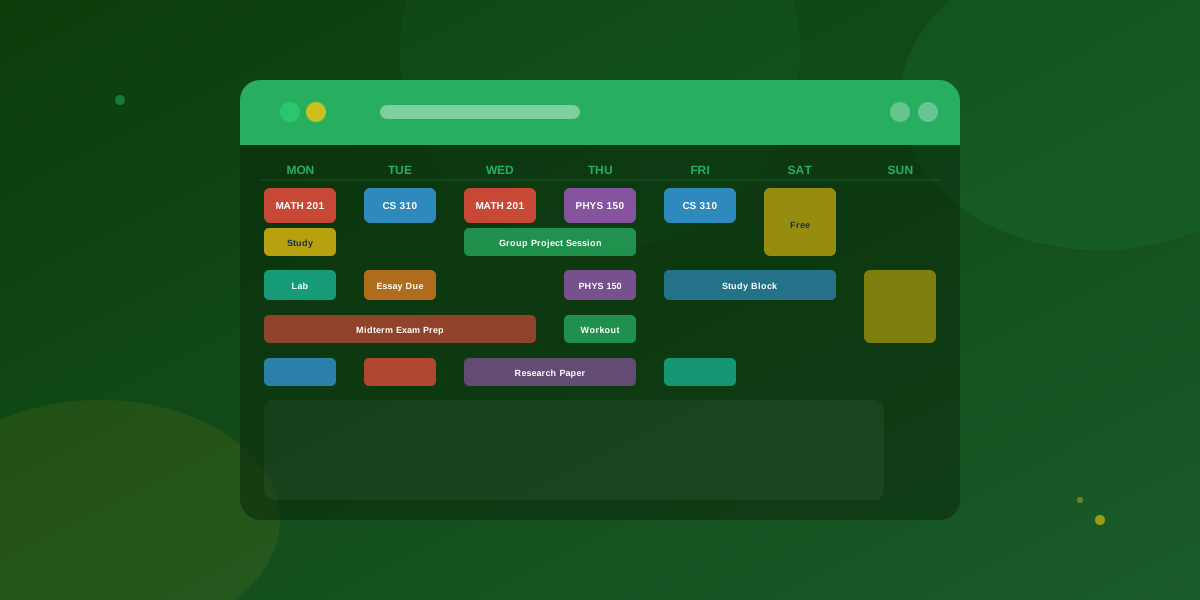
Visual organization makes schedules easier to scan and understand. Use colors to distinguish different types of activities or classes.
My color system:
- Red: Urgent deadlines and exams
- Orange: Important assignments due soon
- Blue: Regular class time
- Green: Study blocks
- Purple: Personal time
When I look at my calendar, I can instantly see what type of activity each block is. This helps me understand my day at a glance.
Implement the Two-Week Rule
The two-week rule: always know what's coming in the next two weeks. This prevents surprises and helps you prepare in advance.
Weekly review process:
- Check the next two weeks
- Identify any conflicts or heavy periods
- Adjust your schedule as needed
- Prepare for upcoming deadlines
I do this every Sunday. I look at the next two weeks, identify busy periods, and adjust my schedule accordingly. No more surprises.
Advanced Organization Strategies
Time-Blocking for Academic Success
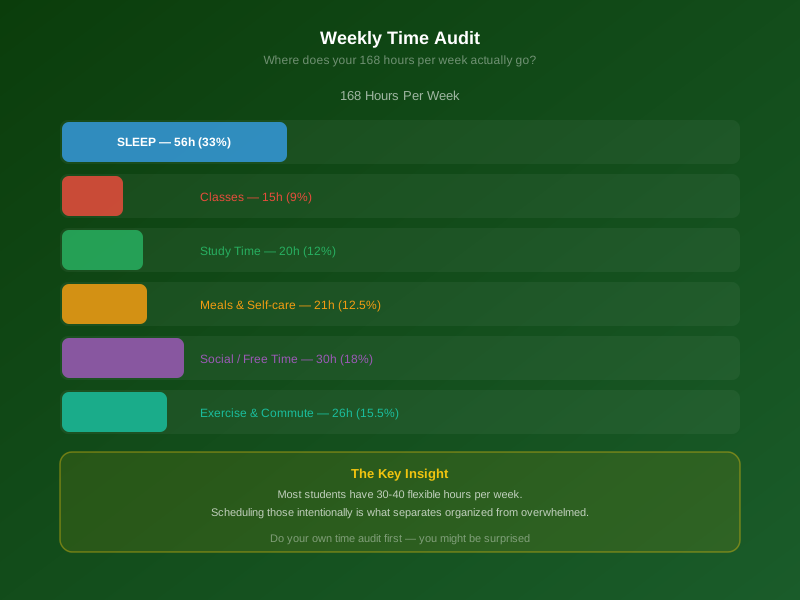
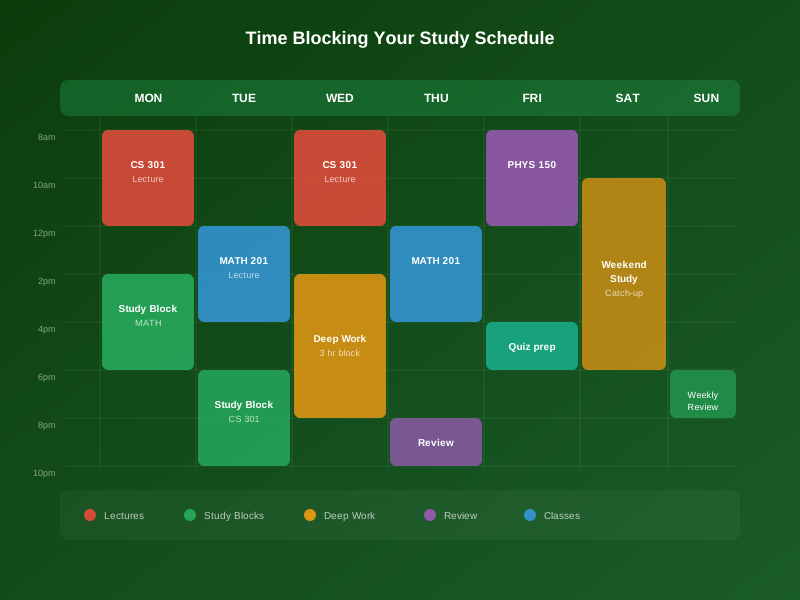
Time-blocking involves assigning specific time slots to tasks. This technique is particularly effective for students.
How to time-block effectively:
- Allocate time for each class's weekly work
- Schedule dedicated blocks for major projects
- Include regular review sessions
- Block out time for breaks and personal activities
I time-block my entire week. Every hour has a purpose. This prevents me from overcommitting and ensures I have time for everything important.
The 1-3-5 Rule for Daily Planning
Each day, plan to accomplish 1 major task (big project, exam prep), 3 medium tasks (assignments, readings), and 5 small tasks (emails, reviews, organizing).
This rule ensures you're productive without overloading your day. I use this on busy days when I have a lot to do. It provides structure while maintaining flexibility.
Weekly Planning Sessions
Set aside 30 minutes each Sunday to plan your upcoming week. Review the previous week, identify upcoming deadlines, schedule study time for each class, plan around personal commitments, and anticipate busy periods.
This weekly ritual changed my life. I used to start each week feeling behind. Now I start each week with a clear plan and confidence.
Managing Multiple Classes
When juggling multiple classes, organization becomes even more critical.
Create Separate Spaces for Each Class
Maintain organized folders, notebooks, or digital files for each class. This makes it easy to find materials quickly.
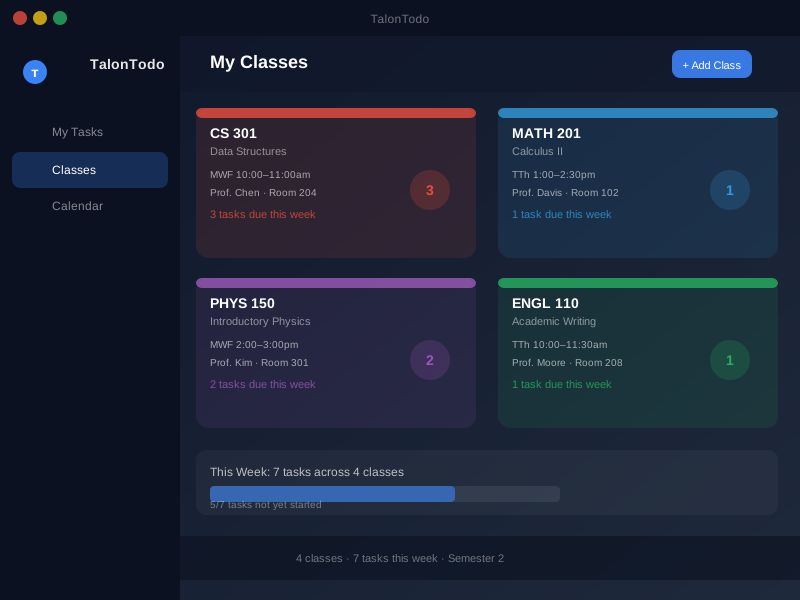
I use TalonTodo's class organization feature. Each class has its own section with assignments, notes, and deadlines. Everything is organized and easy to find.
Prioritize by Deadline and Weight
Not all assignments are equal. Prioritize based on due date (what's due soonest?), weight (what's worth more points?), and difficulty (what requires more time?).
I use TalonTodo's priority calculator to automatically rank assignments. It considers due date, point value, difficulty, and my goals. This helps me focus on what matters most.
Use Weekly Review Sessions
Dedicate time each week to review materials from each class. This prevents cramming and improves retention.
I schedule 30 minutes per class per week for review. This keeps material fresh and prevents last-minute panic.
Digital Tools for Academic Organization
Modern students have powerful tools at their fingertips. Calendar apps sync across devices and share with others. Task management tracks assignments and deadlines. Note-taking apps organize class materials. Cloud storage provides access from anywhere.
The key is choosing tools that integrate well with your workflow. I use TalonTodo because it combines task management, calendar sync, and class organization in one place. Everything works together seamlessly.
Common Organization Pitfalls to Avoid
I've made all of these mistakes. Learn from them:
Over-scheduling: Don't pack every minute with activities. Leave buffer time. I used to schedule back-to-back activities, then get stressed when something ran over.
Under-planning: Failing to plan ahead leads to last-minute stress. I plan my entire semester during syllabus week, then adjust weekly.
Perfectionism: An organized system doesn't need to be perfect—it needs to work. I used to spend more time organizing than actually working. Now I focus on systems that work, not systems that look perfect.
Not reviewing: Regularly review and adjust your system as needed. I review weekly and adjust monthly. Systems need maintenance.
Going it alone: Use tools and systems that support your organization efforts. I built TalonTodo because I needed better tools. Don't try to organize everything manually.
Making Organization a Habit
Like any skill, organization improves with consistent practice. Start with one strategy, master it, then add another.
Building the habit:
- Choose one organization method
- Use it consistently for two weeks
- Evaluate what's working and what isn't
- Adjust and continue
I started with just time-blocking. Once that became habit, I added weekly planning. Then semester overview. Build gradually.
The Long-Term Benefits
A well-organized academic schedule pays dividends beyond just getting assignments done on time:
- Reduced stress: Less scrambling and panic. I know what's coming and I'm prepared.
- Better grades: More time for quality work. Organization creates time.
- Improved work-life balance: Time for activities you enjoy. I can see my free time and protect it.
- Enhanced confidence: Feeling in control of your schedule. Organization creates confidence.
- Better preparation: Ready for the professional world. These skills transfer to careers.
Since implementing these organization strategies, my stress decreased, my grades improved, and I have more free time. The impact has been huge.
How TalonTodo Helps Me Stay Organized
I built TalonTodo specifically to solve my organization problems. Here's how it helps:
Why I built it: I was frustrated with scattered information and missed deadlines. I needed one place where I could see everything—classes, assignments, deadlines, personal commitments—and never miss anything.
How it helps: TalonTodo centralizes everything in one organized system. Classes are organized with their own assignments and deadlines. Calendar sync shows everything in one view. Smart scheduling suggests when to work on things based on actual availability. Priority calculator helps focus on what matters most.
Feature example: The semester overview feature lets me see all my classes, assignments, and deadlines in one place. I can filter by class, priority, or deadline. I can see conflicts weeks in advance. The calendar integration shows how everything fits together, so I never double-book myself.
The app also helps with weekly planning. Every Sunday, I can see the upcoming week, identify busy periods, and adjust my schedule. The smart scheduler suggests when to work on assignments based on my actual availability, not just deadlines.
Your Next Steps
Ready to transform your academic organization? Start by auditing your current system:
- What's working well?
- What's causing stress or confusion?
- What tools or strategies could help?
- What's one change you can make this week?
Then, implement one new organization strategy and build from there. Remember, the best system is the one you'll actually use consistently.
Start small. Master one strategy. Then add another. Organization is a skill that develops over time. Be patient with yourself, and focus on progress, not perfection.
One planner for the whole term
If the schedule is still split across a syllabus, a notes app, and a chat, start from a comparison. The Best Free Student Planner Apps in 2026 puts the free-tier limits in one table.
About the author Jackson Pearce is a student engineer and the creator of TalonTodo, a productivity app designed to help students manage projects, deadlines, and daily tasks more effectively.