Written by Jackson Pearce Student engineer and creator of TalonTodo
I used to be a master procrastinator. I'd have a paper due Friday, and I'd spend Monday through Thursday doing everything except writing it. I'd clean my room, organize my notes, watch tutorials on how to write better papers—anything to avoid actually writing. Then Thursday night, I'd panic, pull an all-nighter, and turn in mediocre work.
I thought I was lazy. Turns out, I was just scared. Scared of not being good enough, scared of failure, scared of starting something I might not finish well. Procrastination wasn't laziness—it was an emotional regulation problem masquerading as a time management issue.
Understanding this changed everything. I learned strategies to break the procrastination cycle, and I built features into TalonTodo specifically to help with this problem.
What Procrastination Actually Is
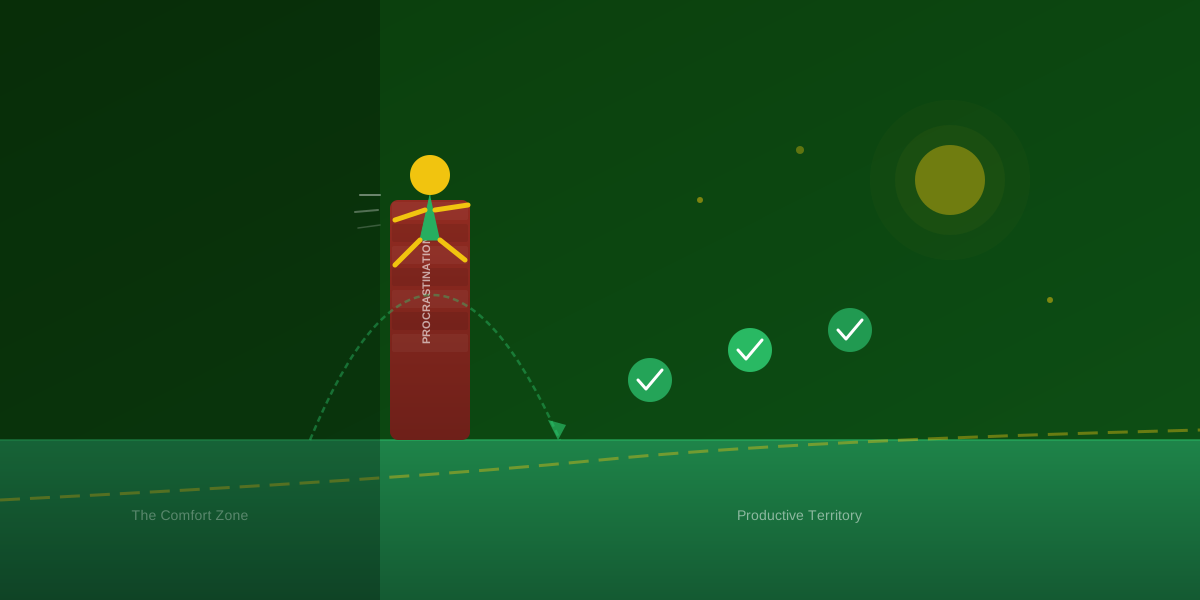
Procrastination isn't laziness—it's the act of delaying or postponing tasks despite knowing there will be negative consequences. It's an emotional regulation problem, not a time management issue.
I used to think I just needed more willpower. But willpower wasn't the problem. The problem was that starting tasks triggered negative emotions—anxiety, overwhelm, fear of failure—and my brain wanted to avoid those feelings. So I'd do anything else instead.
Why We Procrastinate
Several factors contribute to procrastination, and I've experienced all of them:
Fear of failure: Worry about not doing well leads to avoidance. I'd avoid starting because I was afraid I wouldn't do well.
Perfectionism: Waiting for the "perfect" time or conditions. I'd tell myself I'd start when I had more time, when I felt more inspired, when conditions were better. Perfect conditions never came.
Task aversion: Disliking or feeling overwhelmed by tasks. Some tasks just felt unpleasant, so I'd avoid them.
Low self-confidence: Doubting ability to complete tasks successfully. I'd think "I'm not good at this" and avoid starting.
Impulsiveness: Choosing immediate gratification over long-term goals. It felt better to scroll through my phone than to work on assignments.
Unclear goals: Uncertainty about what to do or how to do it. When I didn't know where to start, I'd avoid starting.
Overwhelm: Tasks feel too big or complex to tackle. Large projects felt impossible, so I'd avoid them.
The Procrastination Cycle
Understanding the cycle helps break it. Here's what was happening to me:
- Task appears (assignment, deadline, responsibility)
- Negative emotions arise (anxiety, overwhelm, boredom)
- Avoidance behavior starts (checking phone, cleaning, other tasks)
- Temporary relief from negative emotions
- Guilt and anxiety increase as deadline approaches
- Increased stress and rushed work
- Cycle repeats for next task
Breaking this cycle requires addressing the emotional response, not just willpower. I had to learn to start despite the negative emotions, not wait for them to go away.

Strategies to Overcome Procrastination
Start with Small Steps
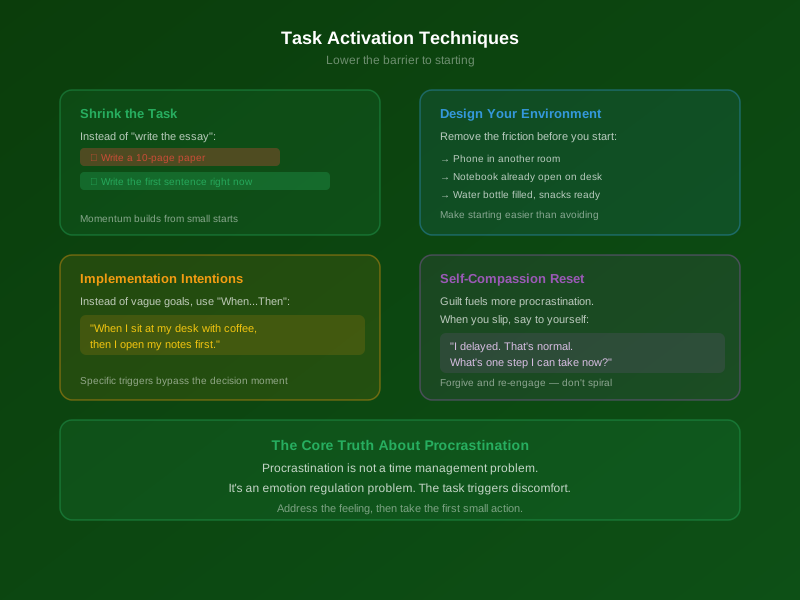
The hardest part is starting. Make the first step tiny. I'd tell myself "I'll just open the document" or "I'll write one paragraph" or "I'll work for 5 minutes." Small steps reduce resistance and build momentum.
Once I started, I usually kept going. The hard part was just beginning.
Use the 2-Minute Rule
If a task takes less than 2 minutes, do it immediately. Quick emails, adding items to lists, organizing small things, filing papers. This prevents small tasks from accumulating and becoming overwhelming.
I use this constantly. Small tasks that pile up become big tasks that feel overwhelming. Doing them immediately prevents that.
Break Tasks Into Smaller Pieces
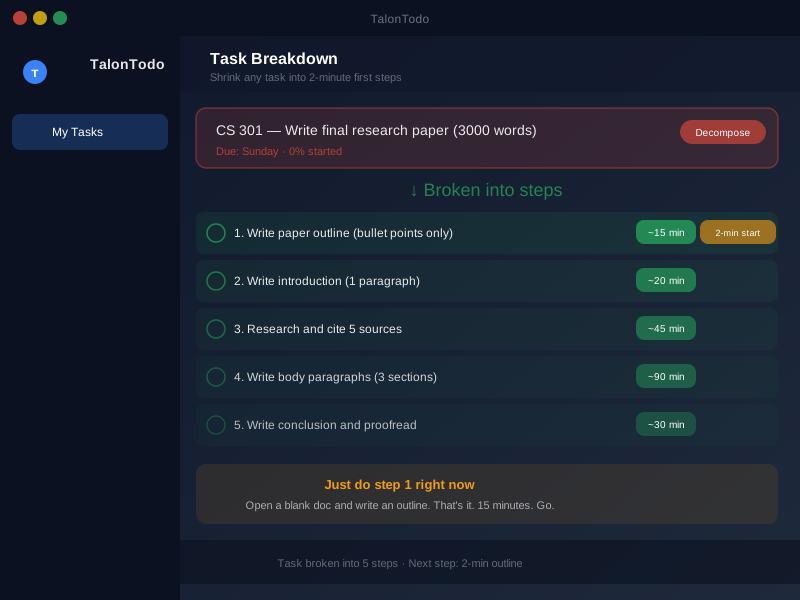
Large tasks feel overwhelming. Break them down. Instead of "Write research paper," I'd create: Choose topic (15 minutes), Find 5 sources (30 minutes), Create outline (30 minutes), Write introduction (30 minutes).
Smaller pieces feel manageable and reduce avoidance. I use TalonTodo's subtask feature to break large assignments into small, actionable pieces.
Use the Pomodoro Technique
Work in focused 25-minute intervals. Set timer for 25 minutes, work on task without distractions, take 5-minute break, repeat. Short intervals reduce the intimidation factor.
I use TalonTodo's built-in Pomodoro timer. Knowing I only have to work for 25 minutes makes starting easier. Often, once I start, I keep going past the timer.
Remove Distractions
Eliminate things that make procrastination easy. Put phone in another room, use website blockers, find quiet study space, close unnecessary tabs, turn off notifications.
Environment shapes behavior. I make procrastination harder by removing distractions. When my phone is in another room, I can't mindlessly scroll.
Address Perfectionism
Perfectionism fuels procrastination. Aim for "good enough" rather than perfect. Remember: done is better than perfect. Revise later—get it down first. Accept that first drafts aren't final products.
This was hard for me. I'm naturally a perfectionist. But learning to accept "good enough" freed me to actually start and finish work.
Identify Your Procrastination Triggers
What situations or tasks trigger your procrastination? Specific subjects or types of assignments, times of day when energy is low, locations that aren't conducive to work, emotional states that lead to avoidance.
Understanding triggers helps you plan around them. I know I procrastinate on writing tasks in the afternoon, so I schedule them for mornings when I have more energy.
Use Implementation Intentions
Plan specific actions for specific situations. "When I sit at my desk, I'll immediately open my assignment." "If I feel like checking my phone, I'll set a 5-minute timer first." "When I finish breakfast, I'll start my study session."
Specific plans reduce decision-making and increase follow-through. I use TalonTodo to set these intentions as recurring tasks with specific triggers.
Reward Yourself
Create rewards for completing tasks. After finishing assignment, watch an episode. After study session, take a walk. After completing task, call a friend. After reaching milestone, treat yourself.
Rewards create positive associations with task completion. I schedule rewards in TalonTodo so I have something to look forward to.
Practice Self-Compassion
Being harsh with yourself increases procrastination. Acknowledge that procrastination is common. Be kind to yourself when you struggle. Learn from setbacks without self-blame. Focus on progress, not perfection.
Self-compassion reduces the negative emotions that fuel procrastination. I used to beat myself up for procrastinating, which made me want to avoid tasks even more. Now I'm kinder to myself, which makes starting easier.
Deeper Strategies
Address Underlying Fears
Procrastination often masks deeper concerns. Fear of failure ("What if I'm not good enough?"), fear of judgment ("What will others think?"), fear of success ("What if I can't maintain it?").
Identifying and addressing fears reduces their power. I've learned that most of my procrastination comes from fear of not being good enough. Recognizing this helps me start anyway.
Improve Time Estimation
We often underestimate how long tasks take. Track actual time spent on activities, add buffer time to estimates, break complex tasks into smaller pieces, review and adjust estimates over time.
Better estimates reduce the "I'll do it later" thinking. I use TalonTodo to track how long tasks actually take, which helps me estimate better in the future.
Increase Task Value
Connect tasks to your goals and values. How does this assignment serve my learning goals? What skills will I develop by completing this? How does this connect to my future career? What will I gain by finishing this?
Increased value reduces avoidance. When I connect assignments to my goals, they feel more meaningful and less like busywork.
Reduce Task Aversion
Make tasks more appealing. Start with easiest or most interesting parts, work in pleasant environments, listen to music if helpful, work with others when appropriate, break up difficult tasks with easier ones.
I make unpleasant tasks more appealing by pairing them with things I enjoy. I'll work on a difficult assignment while listening to music I like, or I'll do it in a coffee shop instead of my room.
Build Self-Confidence
Confidence reduces procrastination. Celebrate small wins, track progress over time, remind yourself of past successes, practice positive self-talk, seek support when needed.
I track my completed tasks in TalonTodo, which helps me see my progress and build confidence. Seeing a list of completed work reminds me that I can do hard things.
Daily Anti-Procrastination Practices
Morning Routine
Start each day with intention. Review your priorities, identify your most important task, plan when you'll work on it, remove potential distractions.
I do this every morning. I review my TalonTodo list, identify my top priority, and plan when I'll work on it. Starting the day with intention makes procrastination less likely.
The "Do the Worst First" Strategy
Tackle your least favorite task first. Gets it out of the way, builds momentum for rest of day, prevents it from hanging over you, makes other tasks feel easier.
I use this on days when I have tasks I really don't want to do. Getting the worst task done first makes the rest of the day feel easier.
Regular Check-Ins
Pause periodically to assess. What am I avoiding right now? Why am I avoiding it? What's one small step I can take? What support do I need?
I check in with myself a few times per day. If I notice I'm avoiding something, I ask myself why and take one small step toward it.
End-of-Day Review
Reflect on the day. What did I accomplish? What did I avoid? Why did I avoid it? What will I do differently tomorrow?
I do this every evening. It helps me learn from my patterns and improve over time.
Breaking Specific Procrastination Patterns
For Writing Assignments
Start with free-writing. Write without editing for 10-15 minutes. Get thoughts on paper first. Don't worry about quality initially. Edit and refine later.
Use outlines. Break writing into sections. Complete one section at a time. Check off sections as finished. Build momentum with progress.
I use TalonTodo to break writing assignments into sections. Each section becomes a subtask. Completing sections gives me a sense of progress, which keeps me motivated.
For Reading Assignments
Start with skimming. Read introduction and conclusion first. Scan headings and subheadings. Read first sentence of paragraphs. Then read in detail.
Take notes while reading. Keeps you engaged, creates study materials, makes reading feel productive, breaks up the task.
I take notes in TalonTodo while reading. This makes reading feel more active and productive, which reduces the urge to procrastinate.
For Problem-Solving Tasks
Start with easier problems. Build confidence and momentum. Understand concepts before tackling harder ones. Review solutions carefully. Learn from each problem.
Work in short bursts. 30-45 minute focused sessions. Take breaks between sessions. Review progress regularly. Celebrate small wins.
I use the Pomodoro Technique for problem-solving. Short focused sessions make it less intimidating, and breaks prevent burnout.
When Procrastination Persists
Seek Support
If procrastination significantly impacts your life, talk to academic advisors, access campus counseling services, join study groups for accountability, consider productivity coaching, explore therapy if underlying issues exist.
I've used campus counseling services when procrastination was really affecting my life. Getting support helped me address underlying issues.
Consider Underlying Issues
Persistent procrastination may indicate ADHD or other learning differences, anxiety or depression, perfectionism, imposter syndrome, or other mental health concerns.
Professional support can help address these. Don't hesitate to seek help if procrastination is significantly impacting your life.
Building Long-Term Habits
Focus on Systems, Not Goals
Create systems that make progress automatic. Daily study routine, regular review schedule, consistent work times, habitual organization.
I've built systems that make starting easier. Same study time every day, same workspace, same routine. Systems reduce the decision-making that leads to procrastination.
Track Your Progress
Monitor your anti-procrastination efforts. Tasks completed on time, quality of work produced, stress levels, overall satisfaction.
I track everything in TalonTodo. Seeing my progress over time helps me stay motivated and identify patterns.
Celebrate Progress
Acknowledge improvements. Recognize when you start tasks earlier. Notice when you break procrastination cycles. Appreciate increased productivity. Reward consistent effort.
I celebrate small wins. Every time I start a task earlier than I used to, I acknowledge it. This positive reinforcement helps build better habits.
How TalonTodo Helps Me Overcome Procrastination
I built TalonTodo specifically to help with procrastination. Here's how it helps:
Why I built it: I was frustrated with tools that made task management harder, not easier. I needed something that would reduce friction, break tasks into manageable pieces, and help me start despite negative emotions.
How it helps: TalonTodo's task breakdown feature lets me break large assignments into small, actionable subtasks. The Pomodoro timer makes starting easier by committing to just 25 minutes. The smart scheduler suggests when to work on things based on my energy levels and schedule. The priority system helps me focus on what matters most.
Feature example: The "Do This Next" feature shows my top priority task with a clear action. Instead of looking at a long list and feeling overwhelmed, I see one clear next step. The task breakdown feature lets me break "Write research paper" into "Choose topic," "Find sources," "Create outline," etc. Each small task feels manageable, which makes starting easier.
The app also helps with implementation intentions. I can set tasks to appear at specific times or after specific triggers. "When I finish breakfast, work on chemistry homework" becomes automatic, reducing decision-making that leads to procrastination.
The Path Forward
Overcoming procrastination is a journey, not a destination. You'll have good days and challenging days. What matters is awareness (recognizing when you're procrastinating), understanding (knowing why you're avoiding tasks), strategies (having tools to break the cycle), practice (consistently applying techniques), and compassion (being kind to yourself through the process).
I still procrastinate sometimes. But now I understand why, and I have tools to break the cycle. That's made all the difference.
Start Overcoming Procrastination Today
Ready to break the procrastination cycle? Start this week:
- Identify one task you've been avoiding
- Break it into smallest possible pieces
- Commit to just starting (5 minutes)
- Remove distractions during that time
- Acknowledge progress no matter how small
- Build on momentum with next small step
Remember: starting is often the hardest part. Once you begin, momentum often carries you forward. The key is just starting, even if it's just for 5 minutes.
Make the avoided task visible
The task you keep skipping needs a class and a date, or it stays a feeling. A Free Assignment Tracker for Students is that list: what is due, for which class, with a reminder before the day.
About the author Jackson Pearce is a student engineer and the creator of TalonTodo, a productivity app designed to help students manage projects, deadlines, and daily tasks more effectively.