Written by Jackson Pearce Student engineer and creator of TalonTodo
I used to schedule my time by just blocking things on a calendar. Classes here, study time there, assignments when I had time. But I was constantly overcommitted, working when I was tired, and feeling like I never had enough time.
Then I learned that effective scheduling goes beyond simply blocking time on a calendar. Smart scheduling involves understanding your energy patterns, optimizing for your goals, and creating systems that work with your natural rhythms rather than against them.
This realization changed how I structure my days, and it's part of why I built TalonTodo's smart scheduler—I needed a tool that would help me schedule intelligently, not just block time randomly.
The Foundation: Understanding Time and Energy
Time vs. Energy
Time and energy are different resources. Time is finite and equal for everyone (24 hours/day). Energy is variable and influenced by many factors (sleep, stress, time of day, etc.).
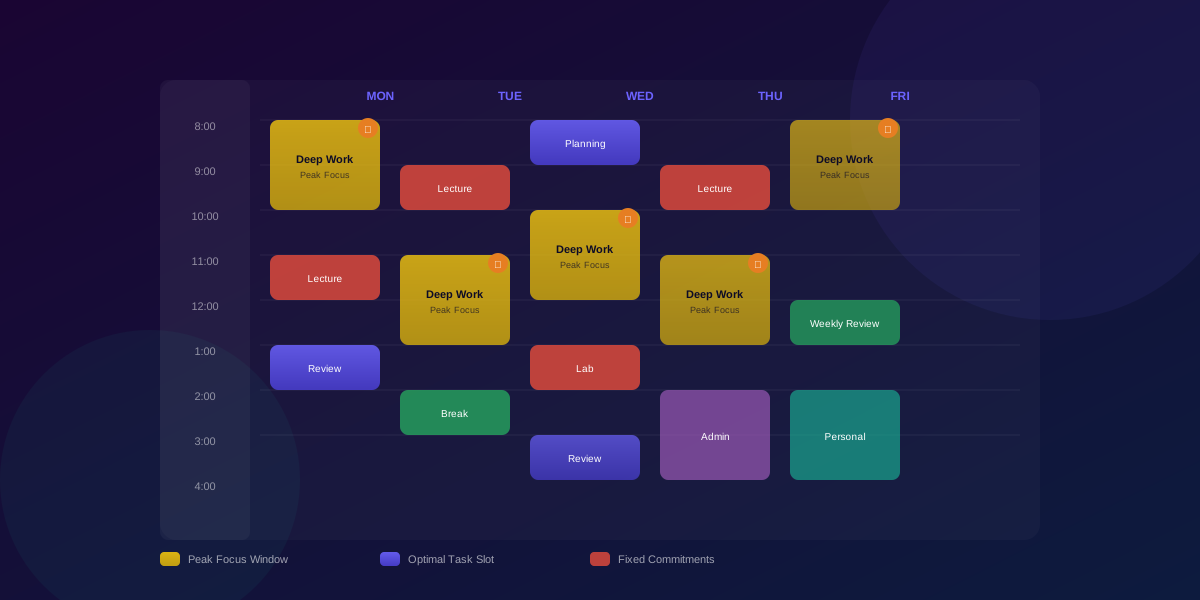
Smart scheduling considers both—you need time available, but also energy appropriate for the task. I used to schedule difficult assignments in the afternoon when I was tired, then wonder why I struggled. Now I match tasks to my energy levels, and everything is easier.
Your Energy Patterns
Everyone has natural energy rhythms. Morning people peak in early hours. Afternoon people have energy that rises midday. Evening people peak later in the day. Some people have variable energy that fluctuates based on other factors.
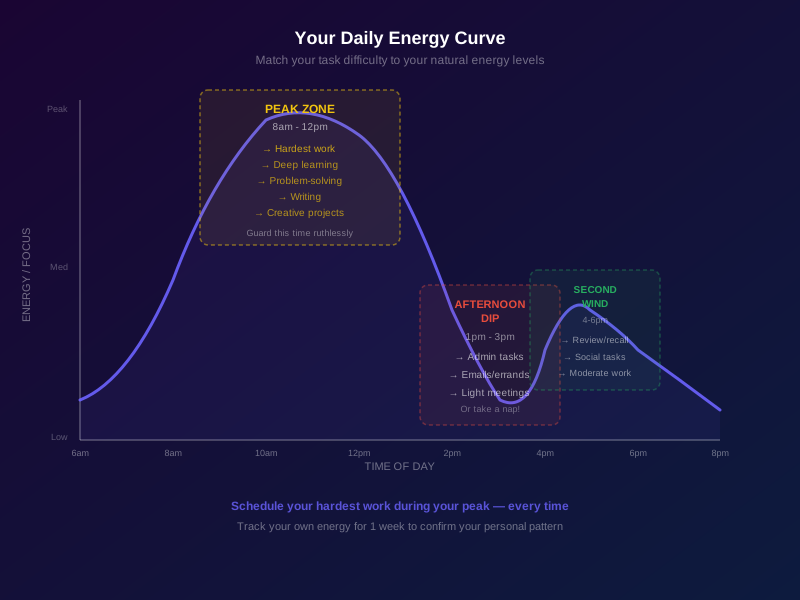
Understanding your patterns helps you schedule effectively. I'm a morning person, so I schedule my most important, difficult work in the mornings. Afternoons are for routine tasks. Evenings are for light work or rest.
I tracked my energy for a month to understand my patterns. I noticed I'm most alert from 8am-12pm, moderately energized from 1pm-5pm, and low energy after 6pm. Now I schedule accordingly.
Core Smart Scheduling Principles
Match Tasks to Energy Levels
Schedule demanding tasks during high-energy periods. Difficult assignments when alert, creative work when inspired, routine tasks during lower energy, review work when moderately energized.
I schedule my most challenging work (writing papers, solving complex problems, learning new concepts) in the morning when I'm fresh. Afternoons are for routine tasks (email, organizing, reviewing). Evenings are for light work or rest.
This simple change doubled my productivity. I get more done in less time because I'm working when I have energy for the work.
Time-Block Strategically
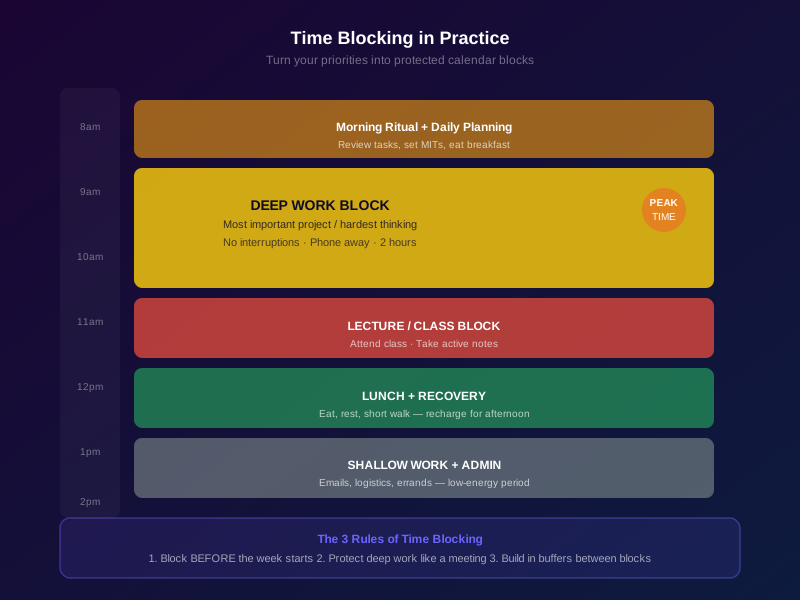
Instead of listing tasks, block time for activities. Large blocks for focused work, medium blocks for standard tasks, small blocks for quick activities, buffer blocks for unexpected tasks.
Time-blocks create structure and prevent overcommitment. I block 3-hour chunks for major assignments, 1-hour blocks for standard tasks, 30-minute blocks for quick tasks, and 15-minute buffers between everything.
This prevents me from overcommitting. When I see my calendar, I can see if I actually have time for something, not just guess.
Batch Similar Activities
Group similar tasks together. Process all emails at once, make all phone calls in one session, complete all readings together, review all notes in one block.
Batching reduces context-switching and increases efficiency. I batch all my email into two 20-minute blocks per day. I batch all my reading into one 2-hour block. I batch all my review work into one 1-hour block.
This saves me hours every week. Instead of constantly switching between different types of work, I stay in one "mode" and work more efficiently.
Plan Around Fixed Commitments
Start with immovable items: classes, work shifts, important meetings, personal commitments. Then fill remaining time with flexible activities.
I always start with fixed commitments. I block out classes, work shifts, and personal commitments first. Then I fill the remaining time with study blocks, assignment work, and other flexible activities.
This ensures I never double-book myself and I can see my actual availability.
Leave Buffer Time
Don't pack every minute. 15 minutes between activities, buffer around travel time, space for unexpected tasks, time for transitions.
Buffers prevent domino effects when one thing runs over. I add 15-minute buffers between everything. If a class runs over, I have buffer time. If an assignment takes longer than expected, I have buffer time.
This simple practice has eliminated most of my scheduling stress. I'm no longer constantly running from one thing to the next.
Advanced Scheduling Techniques
The Time-Boxing Method
Set specific time limits for tasks. Estimate how long tasks should take, set a timer and work within that box, stop when time is up (evaluate and adjust). This prevents tasks from expanding unnecessarily.
I use time-boxing for tasks that tend to expand. "Review notes" could take 30 minutes or 3 hours. I set a 1-hour box, work within it, then stop. If I need more time, I schedule another box later.
This prevents perfectionism and ensures I don't spend too much time on low-value tasks.
Energy-Based Scheduling
Organize your day around energy levels. High energy (morning) for difficult assignments, creative projects, complex problem-solving, learning new material. Medium energy (afternoon) for reviewing notes, completing routine tasks, responding to emails, organizing and planning. Low energy (evening) for light reading, reviewing completed work, administrative tasks, relaxation and recovery.
I structure my entire day around energy. Mornings are for deep work. Afternoons are for maintenance. Evenings are for rest. This maximizes my productivity and prevents burnout.
The 1-3-5 Rule
Each day, plan to complete 1 big task (major assignment, exam prep, large project), 3 medium tasks (standard assignments, readings, reviews), and 5 small tasks (emails, organization, quick reviews).
This provides structure while maintaining flexibility. I use this on busy days when I have a lot to do. It ensures I make progress on important work while still handling routine tasks.
Theme Days
Assign themes to different days. Monday: Planning and organization (review week ahead, organize tasks and priorities, plan study schedule, set goals for week). Tuesday-Thursday: Focused work (deep work on assignments, study sessions, project work, high-priority tasks). Friday: Review and catch-up (complete weekly tasks, review week's progress, organize for next week, light work and preparation). Weekend: Major projects and recovery (large assignments, exam preparation, personal time, rest and recharge).
Theming helps you mentally prepare for the day's focus. When I see it's Tuesday, I know it's a focused work day, and I plan accordingly.
Reverse Engineering from Deadlines
Start with deadlines and work backward. Mark deadline on calendar, identify milestone before deadline, schedule completion time, schedule revision time, schedule work time, schedule start time.
This ensures you start early enough. I use this for all major assignments. I work backward from the deadline to figure out when I need to start, then I schedule work time accordingly.
Subject-Specific Scheduling Strategies
For Heavy Reading Courses
Distributed reading: Read in shorter, frequent sessions (30-45 minutes at a time, multiple sessions per day). Better retention than marathon sessions.
Active reading sessions: Take notes while reading, summarize after each chapter, review notes regularly, connect to other course material.
I schedule 3-4 reading sessions per week for heavy reading courses. Each session is 45 minutes, which is sustainable and effective.
For Problem-Solving Courses
Regular practice blocks: Daily practice sessions, 45-60 minute blocks, mix new and review problems, track areas needing work.
Problem-solving sessions: Work through problems actively, review solutions carefully, understand concepts not just answers, practice under time pressure.
I schedule daily practice blocks for math and science courses. Consistent practice is more effective than occasional marathon sessions.
For Project-Heavy Courses
Milestone-based scheduling: Break projects into phases, set milestones for each phase, schedule milestone reviews, allocate time for each phase.
Parallel work: Work on multiple project components, switch between components, maintain momentum on all parts, final integration phase.
I use milestone-based scheduling for all major projects. This prevents last-minute rushes and ensures quality work.
Weekly Planning Ritual
I dedicate 30-60 minutes weekly to plan. Review previous week (what worked well, what didn't work, what needs adjustment, what lessons learned). Assess upcoming week (what deadlines are coming, what's the workload, what conflicts exist, what priorities matter most). Create weekly schedule (block time for each class's work, schedule major assignments, plan study sessions, include personal time). Set weekly goals (what must be completed, what's the most important, what can wait if needed, what will success look like).
This weekly ritual sets me up for success. I see what's coming, plan accordingly, and start each week with confidence.
Handling Schedule Disruptions
Build Flexibility
No schedule survives contact with reality. Expect disruptions, build in flexibility, have backup plans, adjust as needed.
I build flexibility into every schedule. I have buffer time, I have backup plans, and I'm ready to adjust when things don't go as planned.
Recovery Strategies
When schedules get disrupted, identify what's essential, reorganize remaining time, adjust non-critical items, don't abandon the schedule completely.
I've learned to recover quickly from disruptions. I identify what's essential, adjust what I can, and get back on track as soon as possible.
Learn and Adapt
After disruptions, analyze what happened, identify prevention strategies, adjust scheduling approach, build resilience.
Every disruption is a learning opportunity. I analyze what happened and adjust my approach to prevent similar issues in the future.
How TalonTodo's Smart Scheduler Works
I built TalonTodo's smart scheduler specifically to solve my scheduling problems. Here's how it helps:
Why I built it: I was frustrated with scheduling tools that just blocked time without considering energy, priorities, or actual availability. I needed something that would schedule intelligently, not just randomly.
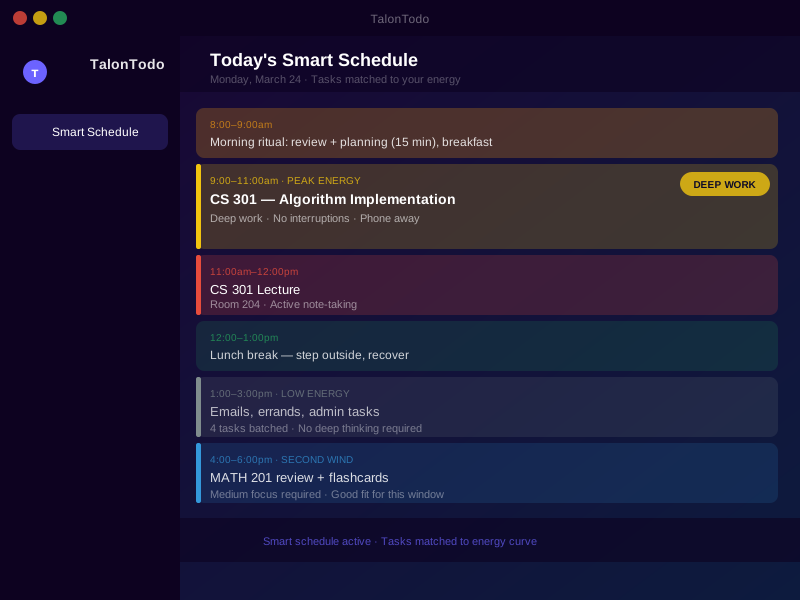
How it helps: TalonTodo's smart scheduler considers your energy patterns, task priorities, deadlines, and actual availability. It suggests when to work on assignments based on when you're most productive, not just when they're due. It identifies conflicts before they happen and suggests adjustments.
Feature example: The smart scheduler analyzes your completion patterns to learn when you're most productive. If you consistently complete difficult tasks in the morning, it suggests scheduling new difficult tasks in the morning. It also looks at your calendar to see actual availability, not just deadlines. If you have a free block Tuesday afternoon, it suggests scheduling work then, even if the deadline is Friday.
The scheduler also helps with energy-based scheduling. It suggests matching task difficulty to your energy levels. Difficult assignments get suggested for high-energy periods. Routine tasks get suggested for lower-energy periods. This maximizes productivity and prevents burnout.
Measuring Scheduling Success
Track how effective scheduling impacts your life. Meeting deadlines consistently, reduced stress about time, better balance in life, more free time, improved academic performance, better quality work.
Since implementing smart scheduling, I've noticed all of these improvements. I meet deadlines consistently, I have less stress, I have better balance, and I'm performing better academically.
Your Scheduling Action Plan
Ready to schedule smarter? Start this week:
- Identify your energy patterns (track for a week)
- Create a weekly template based on your schedule
- Time-block your week including all priorities
- Match tasks to energy levels appropriately
- Leave buffer time between activities
- Review and adjust at end of week
Start with one technique, master it, then add more. Smart scheduling is a skill that develops over time.
The goal isn't perfect scheduling—it's better scheduling than you have now. Start small, build gradually, and watch your productivity soar.
About the author Jackson Pearce is a student engineer and the creator of TalonTodo, a productivity app designed to help students manage projects, deadlines, and daily tasks more effectively.