Written by Jackson Pearce Student engineer and creator of TalonTodo
I used to have a mental to-do list of tiny tasks that never got done. Reply to that email. Put away those clothes. Update my calendar. File that paper. They weren't hard, just annoying. So I'd put them off, and they'd pile up. Before I knew it, I had dozens of small tasks weighing on my mind, taking up mental space, and making me feel constantly behind.
Then I learned about the 2-minute rule, and it changed everything. If a task takes less than 2 minutes, do it immediately. Don't write it down. Don't schedule it. Don't think about it. Just do it.
This simple rule transformed how I handle small tasks, and it's part of why I built quick-action features into TalonTodo.
What the 2-Minute Rule Actually Is
The rule is simple: if a task takes less than 2 minutes, do it immediately. Don't write it down. Don't schedule it. Don't think about it. Just do it.
Why? Because the time it takes to organize, remember, and mentally track these tiny tasks often exceeds the time it takes to complete them. You're creating overhead for no reason.
I used to add every small task to my to-do list. "Reply to email" would go on the list. "File paper" would go on the list. "Update calendar" would go on the list. By the end of the day, I'd have 20 small tasks on my list, and I'd feel overwhelmed. But most of them took less than 2 minutes each. I was spending more time managing them than doing them.
Why It Works
There's a psychological barrier between "deciding to do something" and "actually doing it." That barrier costs energy. When you immediately act on small tasks, you eliminate that barrier entirely. You skip the decision fatigue.
Plus, small wins build momentum. Knocking out three quick tasks in five minutes feels better than spending five minutes planning when you'll do them later.
I noticed this immediately. When I started applying the 2-minute rule, I felt more accomplished. I was getting things done instead of just planning to get things done. The momentum from small wins carried over to bigger tasks.
What Counts as 2 Minutes?
Obviously, not every task fits this rule. Here's what does:
- Quick email replies (not long emails that need thought)
- Putting something back where it belongs
- Adding events to your calendar
- Filing a document
- Quick messages or texts
- Tidying up a small space
- Taking out trash that's ready to go
- Watering a plant
- Quick personal grooming tasks
- Updating a task status
- Quick note-taking
What doesn't count? Tasks that feel like they might be 2 minutes but actually take longer. Be honest with yourself. "Quick email" that turns into a 20-minute back-and-forth doesn't count. "File papers" that turns into reorganizing your entire filing system doesn't count.
I've learned to be honest about time estimates. If I'm not sure something will take 2 minutes, I either do it immediately if I have time, or I add it to my list with a realistic time estimate.
The Compound Effect
This isn't about one task—it's about building a habit. When you consistently apply the 2-minute rule:
- Your mental load decreases (fewer things weighing on you)
- Your physical space stays cleaner
- Your systems stay updated
- You build a reputation for responsiveness
- You feel more in control
I've noticed all of these benefits. My mental load is lighter because I'm not carrying around dozens of small tasks. My workspace stays cleaner because I put things away immediately. My calendar stays updated because I add events right when I learn about them. People notice that I respond quickly to messages. Most importantly, I feel more in control of my life.
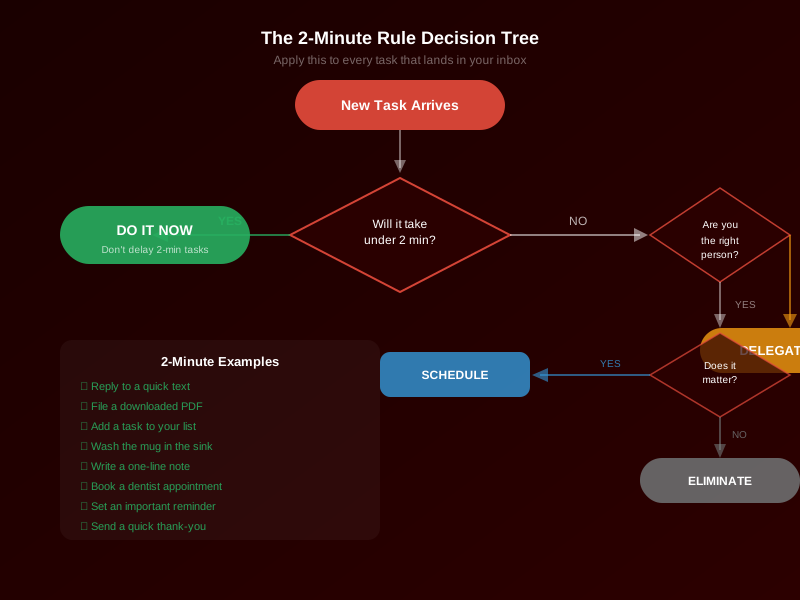
The Math Behind the Rule
Let's do the math. Say you have 10 small tasks that each take 2 minutes. That's 20 minutes of work.
Traditional approach:
- Add 10 tasks to list: 5 minutes
- Review list periodically: 10 minutes
- Decide when to do each: 5 minutes
- Actually do tasks: 20 minutes
- Check them off list: 2 minutes
- Total: 42 minutes
2-minute rule approach:
- Do tasks as they come up: 20 minutes
- Total: 20 minutes
You save 22 minutes, plus you eliminate the mental load of carrying those tasks around. That's why the rule works.
When to Break the Rule
The 2-minute rule isn't absolute. Sometimes you're in deep focus and shouldn't interrupt yourself. Sometimes the task requires context you don't have right now.
Use judgment, but default to doing it if you can.
I break the rule when:
- I'm in a deep work session (I don't interrupt focused time)
- I don't have the context needed (can't reply to email without checking something first)
- I'm in the middle of something more important
- The task requires tools or resources I don't have access to right now
But in most cases, if it's truly 2 minutes and I can do it, I do it immediately.
Real-World Examples
Here's how I apply the 2-minute rule in different areas:
Before: I'd let emails pile up, then spend an hour "processing" them. Most were quick replies I could have handled immediately.
After: I reply to quick emails immediately. If it takes less than 2 minutes, I reply right away. My inbox stays cleaner, and people get faster responses.
Physical Space
Before: I'd let small messes accumulate. A few papers here, a cup there, clothes on a chair. By the end of the week, I'd need to do a big cleanup.
After: I put things away immediately. Papers get filed, cups go to the kitchen, clothes get put away. My space stays clean with minimal effort.
Calendar
Before: I'd learn about events and think "I'll add that to my calendar later." Then I'd forget, or I'd have to add 10 things at once.
After: I add events to my calendar immediately when I learn about them. Takes 30 seconds, and I never forget.
Task Management
Before: I'd add every small task to my list. "Reply to email" would be a task. "File paper" would be a task. My list would be cluttered with tiny tasks.
After: I do small tasks immediately. My task list focuses on meaningful work, not busywork.
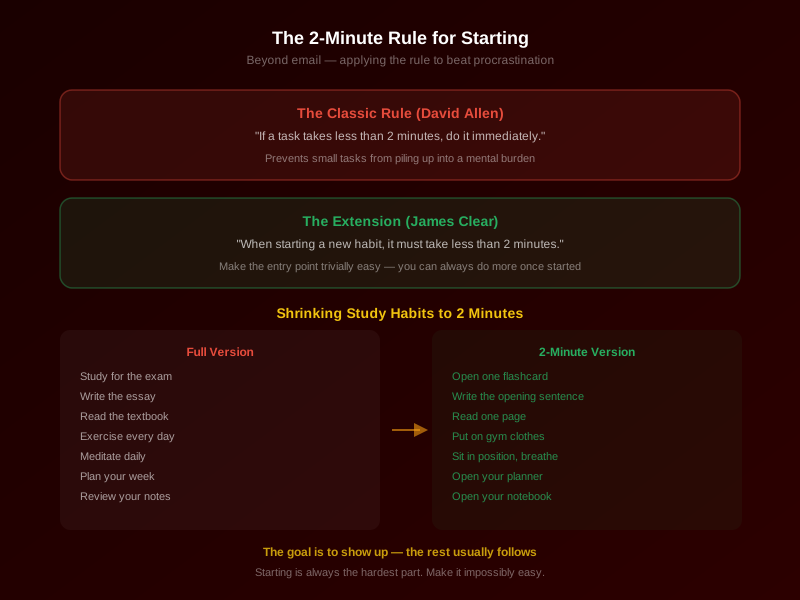
Common Mistakes
I made these mistakes when I started:
Mistake 1: Being Too Strict
I tried to apply the rule to everything, even when I was in deep focus. That broke my flow and reduced productivity.
Solution: Use judgment. If you're in deep work, don't interrupt yourself. Apply the rule when it makes sense.
Mistake 2: Underestimating Time
I'd think tasks would take 2 minutes, but they'd actually take 10. Then I'd feel frustrated.
Solution: Be honest about time estimates. If you're not sure, either do it immediately if you have time, or add it to your list.
Mistake 3: Not Having Systems
I'd try to do tasks immediately, but I didn't have systems set up. Where do I file this? How do I reply to that? Without systems, even 2-minute tasks take longer.
Solution: Set up systems so 2-minute tasks are truly quick. Have a filing system. Have email templates. Have a place for everything.
Mistake 4: Ignoring the Rule When Busy
When I was busy, I'd stop applying the rule. Then small tasks would pile up, making me feel even more overwhelmed.
Solution: The rule is most important when you're busy. Small tasks pile up fastest during busy periods. Keep applying the rule even when stressed.
Building the Habit
Like any habit, the 2-minute rule takes practice. Start with one area:
- Pick one area (email, physical space, calendar, etc.)
- Apply the rule for one week
- Notice the difference in your mental load and productivity
- Expand to other areas gradually
I started with email. Once that became habit, I expanded to physical space. Then calendar. Then task management. Build gradually.
How TalonTodo Supports the 2-Minute Rule
I built quick-action features into TalonTodo to support the 2-minute rule. Here's how it helps:
Why I built it: I wanted a way to quickly capture and complete small tasks without cluttering my main task list. The 2-minute rule works best when you can act immediately, not when you have to navigate through menus.
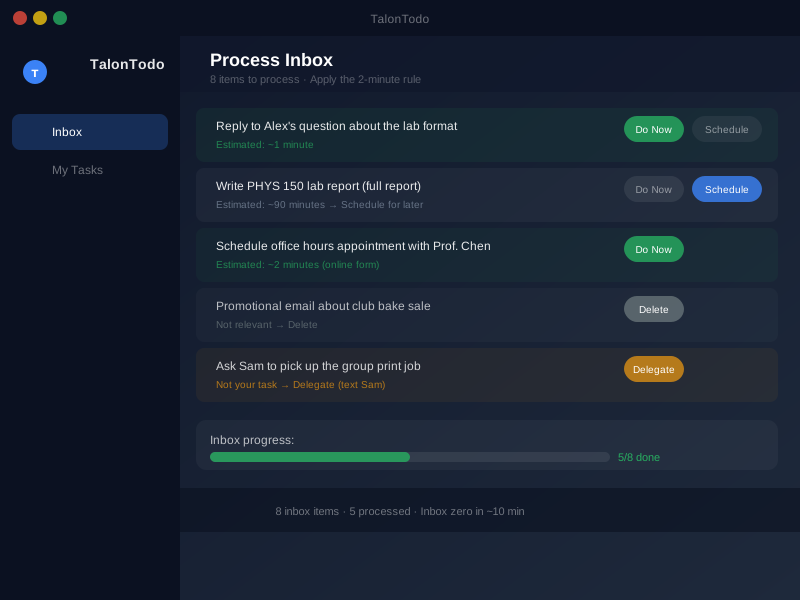
How it helps: TalonTodo's quick-add feature lets you capture tasks instantly using natural language. If it's a 2-minute task, you can complete it right from the quick-add interface. The app also suggests when tasks might be 2-minute tasks and encourages immediate action.
Feature example: The quick actions feature shows common 2-minute tasks (reply to email, update calendar, file document) that can be completed directly from the app. Instead of adding "Reply to Sarah's email" to your task list, you can reply immediately through the quick action. This keeps your main task list focused on meaningful work while still handling small tasks efficiently.
The app also helps identify 2-minute tasks. When you add a task, it suggests if it might be a quick task that could be done immediately. This gentle reminder helps you apply the rule consistently.
The Results
After applying the 2-minute rule consistently, I noticed:
- Lighter mental load: Fewer small tasks weighing on my mind
- Cleaner space: Physical and digital spaces stay organized
- Better responsiveness: People get faster replies and responses
- More focus: Task list focuses on meaningful work, not busywork
- Increased productivity: Less time managing tasks, more time doing work
The impact has been significant. I feel more in control, less overwhelmed, and more productive. All from a simple 2-minute rule.
Getting Started
Try it this week. Pick one area of your life—email, your desk, your phone notifications, your calendar—and apply the 2-minute rule rigorously for a week. See what changes.
You might find that most of your "to-do list" is just a bunch of 2-minute tasks you've been avoiding. Handle them immediately, and watch your productivity soar.
Start small. Pick one area. Apply the rule. Notice the difference. Then expand. The 2-minute rule is simple, but its impact is huge.
About the author Jackson Pearce is a student engineer and the creator of TalonTodo, a productivity app designed to help students manage projects, deadlines, and daily tasks more effectively.