Written by Jackson Pearce Student engineer and creator of TalonTodo
My first year of college, I felt like I was drowning. Classes, assignments, exams, work, social life—everything was competing for my time, and I had no system to manage it. I'd stay up all night finishing assignments, skip meals to study, and still feel like I was constantly behind.
Then I learned that time management isn't about finding more time—it's about using the time you have more effectively. I implemented these 10 strategies, and they transformed my academic life. These strategies became the foundation for TalonTodo, because I needed a tool that would help me implement them consistently.

Why Time Management Matters for Students
Time management isn't just about getting things done—it's about creating space for what matters most. When you manage your time effectively, you reduce stress, improve your grades, and have more time for activities you enjoy.
Research shows that students who practice good time management experience lower stress levels, better academic performance, improved work-life balance, and enhanced well-being.
I've experienced all of these benefits. Since implementing these strategies, my stress has decreased, my grades have improved, and I have more free time. The impact has been huge.
10 Time Management Strategies Every Student Should Know
1. Use the Pomodoro Technique
The Pomodoro Technique involves working in focused 25-minute intervals followed by 5-minute breaks. This method helps maintain concentration and prevents burnout.
How to implement it:
- Set a timer for 25 minutes
- Work on a single task without distractions
- Take a 5-minute break after each session
- After 4 pomodoros, take a longer 15-30 minute break
I use TalonTodo's built-in Pomodoro timer. Knowing I only have to work for 25 minutes makes starting easier. Often, once I start, I keep going past the timer. The technique has transformed how I study and work.
2. Create a Master Schedule
A master schedule visualizes all your commitments in one place. Include classes, study blocks, assignments, and personal activities.
Tips for building your schedule:
- Use a digital calendar or planner
- Color-code different types of activities
- Block out study time for each class
- Include buffer time between activities
I use TalonTodo's calendar integration to create a master schedule. Everything is in one place—classes, assignments, work, personal commitments. I can see my entire life at a glance, which helps me plan and avoid conflicts.
3. Prioritize Tasks with the Eisenhower Matrix
Not all tasks are created equal. The Eisenhower Matrix helps you categorize tasks by urgency and importance:
- Urgent and Important: Do these first
- Important but Not Urgent: Schedule these
- Urgent but Not Important: Delegate if possible
- Neither Urgent nor Important: Eliminate these
I use this matrix daily. It helps me focus on what actually matters, not just what's due soonest. TalonTodo's priority calculator uses similar logic to automatically rank tasks.
4. Break Down Large Projects
Large assignments can feel overwhelming. Break them into smaller, manageable chunks with specific deadlines.
Example: Instead of "Write research paper," create tasks like:
- Choose topic (Day 1)
- Research sources (Days 2-3)
- Create outline (Day 4)
- Write introduction (Day 5)
- And so on...
I use TalonTodo's subtask feature to break down large assignments. Each small task feels manageable, which makes starting easier and progress visible.
5. Eliminate Distractions
Your phone, social media, and other distractions can derail your productivity. Create a distraction-free study environment.
Try these strategies:
- Use website blockers during study time
- Put your phone in another room
- Use apps that track your productivity
- Find a quiet study space
I put my phone in another room during study sessions. I use website blockers to prevent mindless scrolling. I have a dedicated study space that's free from distractions. These simple changes have dramatically improved my focus.
6. Learn to Say No
Your time is limited. Learn to say no to commitments that don't align with your priorities or overload your schedule.
It's okay to decline invitations or requests when you need to focus on academics or self-care. I've learned that saying no protects my time for what actually matters.
7. Use Time-Blocking
Time-blocking involves assigning specific time slots to activities. This prevents tasks from taking longer than necessary.
Benefits of time-blocking:
- Creates structure in your day
- Prevents overcommitment
- Makes it easier to estimate time needed
- Reduces decision fatigue
I time-block my entire week. Every hour has a purpose. This prevents me from overcommitting and ensures I have time for everything important.
8. Review and Adjust Weekly
Spend 30 minutes each week reviewing your schedule and adjusting as needed. This helps you stay flexible and adapt to changes.
Weekly review checklist:
- What worked well this week?
- What didn't work?
- What needs to change?
- What are my priorities for next week?
I do a weekly review every Sunday. I look at what worked, what didn't, and what needs to change. This keeps my systems effective and my schedule realistic.
9. Take Advantage of Small Pockets of Time
Waiting for class, commuting, or between activities? Use these small time pockets productively.
Ideas for small time blocks:
- Review flashcards
- Read assigned materials
- Listen to educational podcasts
- Organize your notes
- Plan your next study session
I use small pockets of time for quick tasks. Waiting for class? Review flashcards. Commuting? Listen to educational podcasts. These small blocks add up to significant learning time.
10. Get Enough Sleep
This might seem counterintuitive, but adequate sleep is crucial for effective time management. When you're well-rested, you're more productive and efficient.
Aim for 7-9 hours of sleep per night. You'll get more done in less time when you're alert and focused.
I used to sacrifice sleep to get more work done. But I was less productive, made more mistakes, and took longer to complete tasks. Now I prioritize sleep, and I'm more productive with less time.
Tools That Can Help
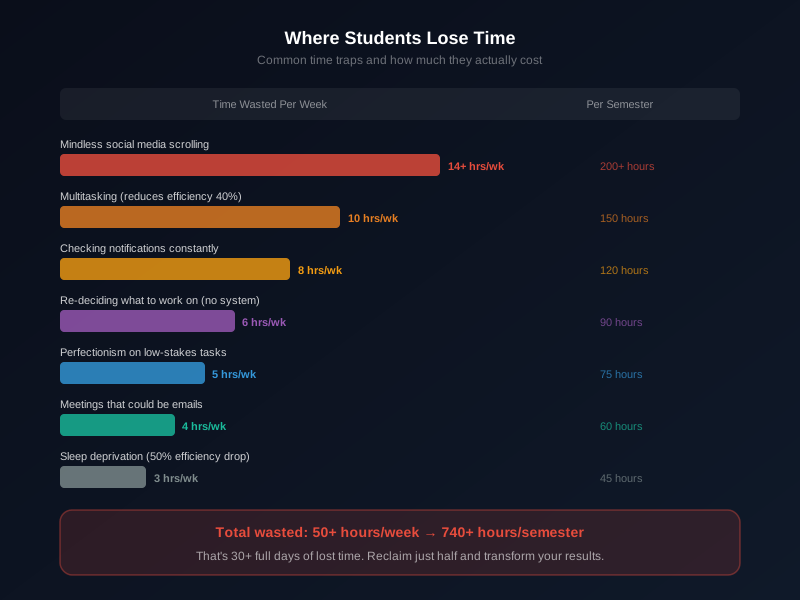
Modern students have access to powerful tools for time management. Task management apps track assignments and deadlines. Calendar apps sync your schedule across devices. Focus apps block distractions and track productivity. Note-taking apps organize class materials efficiently.
I built TalonTodo to combine all of these tools in one place. Task management, calendar sync, focus features, and organization—all integrated and working together.
Making Time Management a Habit
Time management is a skill that improves with practice. Start by implementing one or two strategies, then gradually add more as they become habits.
Remember: perfection isn't the goal—progress is. Even small improvements in how you manage time can have significant positive impacts on your academic and personal life.
I started with just the Pomodoro Technique and time-blocking. Once those became habits, I added more strategies. Build gradually, and be patient with yourself.
How TalonTodo Helps Me Manage Time
I built TalonTodo specifically to help me implement these time management strategies. Here's how it helps:
Why I built it: I was frustrated with tools that didn't work together. I had a task app, a calendar app, a focus app, and they all worked separately. I needed one tool that integrated everything and helped me implement these strategies consistently.
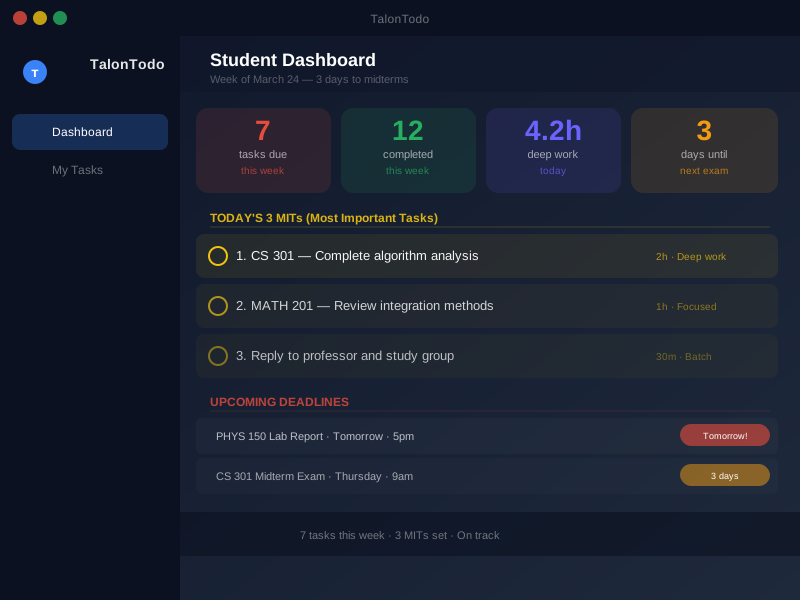
How it helps: TalonTodo combines task management, calendar sync, Pomodoro timer, priority system, and smart scheduling in one integrated tool. The calendar shows all commitments in one view. The smart scheduler suggests when to work on things. The Pomodoro timer helps maintain focus. The priority system helps focus on what matters.
Feature example: The integrated calendar and task system shows how assignments fit into your schedule. You can see conflicts before they happen, identify available time blocks, and plan accordingly. The smart scheduler suggests when to work on assignments based on your actual availability and energy levels, not just deadlines. This makes time management easier and more effective.
The app also helps with the weekly review. You can see what you accomplished, what's coming up, and what needs attention—all in one place. This makes the weekly review faster and more effective.
Real-World Impact
Since implementing these strategies:
- Less stress: I see what's coming and prepare, so I'm not surprised
- Better grades: More time for quality work means better results
- More free time: Efficiency creates space for activities I enjoy
- Better balance: I can see my commitments and protect personal time
- More confidence: Feeling in control of my schedule builds confidence
The impact has been significant. These strategies transformed my academic experience from chaotic to organized, from stressful to manageable.
Getting Started
Ready to take control of your schedule? Start this week:
- Pick one strategy to implement
- Use it consistently for two weeks
- Notice the results (less stress, more productivity, more time)
- Add another strategy once the first becomes habit
- Build gradually until you're using multiple strategies
Start small. Master one strategy. Then add another. Time management is a skill that develops over time. Be patient with yourself, and focus on progress, not perfection.
Remember: the goal isn't to be perfect—it's to be better than you were yesterday. Even small improvements compound over time.
Where the assignments go
A schedule only helps if the work itself has a home. A Free Assignment Tracker for Students is the list I use: each class, each due date, and a reminder before the day arrives.
About the author Jackson Pearce is a student engineer and the creator of TalonTodo, a productivity app designed to help students manage projects, deadlines, and daily tasks more effectively.